SpringWell Futuresoft vs Nuvo Halo: Which Water Conditioner Wins for Hard Water?
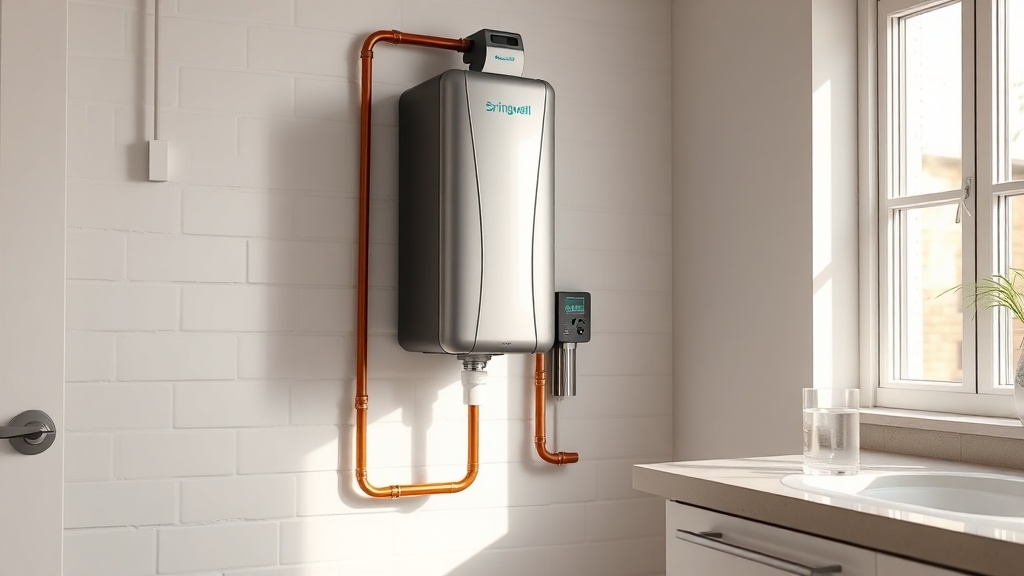
For homeowners battling hard water without the hassle of salt-based softeners, two names dominate the conversation: SpringWell Futuresoft and Nuvo Halo. Both claim to prevent scale, preserve essential minerals, and work without electricity or wastewater, but their technologies and real-world performance diverge sharply. This side-by-side comparison examines how each conditioner handles hard water, which one maintains flow rates, and where your money goes over the long haul.
How Do Their Scale Prevention Technologies Differ?
SpringWell Futuresoft uses template-assisted crystallization (TAC), a physical process that transforms hardness minerals into harmless, non-stick crystal particles. These micro-crystals flow through plumbing without adhering to pipes or fixtures. The system requires no salt, no backwashing, and no electricity—just a dedicated cartridge that lasts up to three years depending on water usage and hardness levels.
Nuvo Halo relies on chelation, a chemical process where a food-grade citric acid solution binds to calcium and magnesium ions, keeping them suspended in water. Instead of crystallizing minerals, Nuvo Halo prevents them from precipitating as scale. The system uses a replaceable salt-free cartridge based on citric acid pellets, which typically last six to nine months for an average household.
The key difference lies in retention of beneficial minerals. SpringWell Futuresoft keeps magnesium and calcium in the water—they remain bioavailable—while Nuvo Halo’s chelation process can remove some of these elements depending on dosage. For homeowners who prioritize mineral retention, TAC technology often wins.
What Are the Annual Maintenance Costs for Each System?
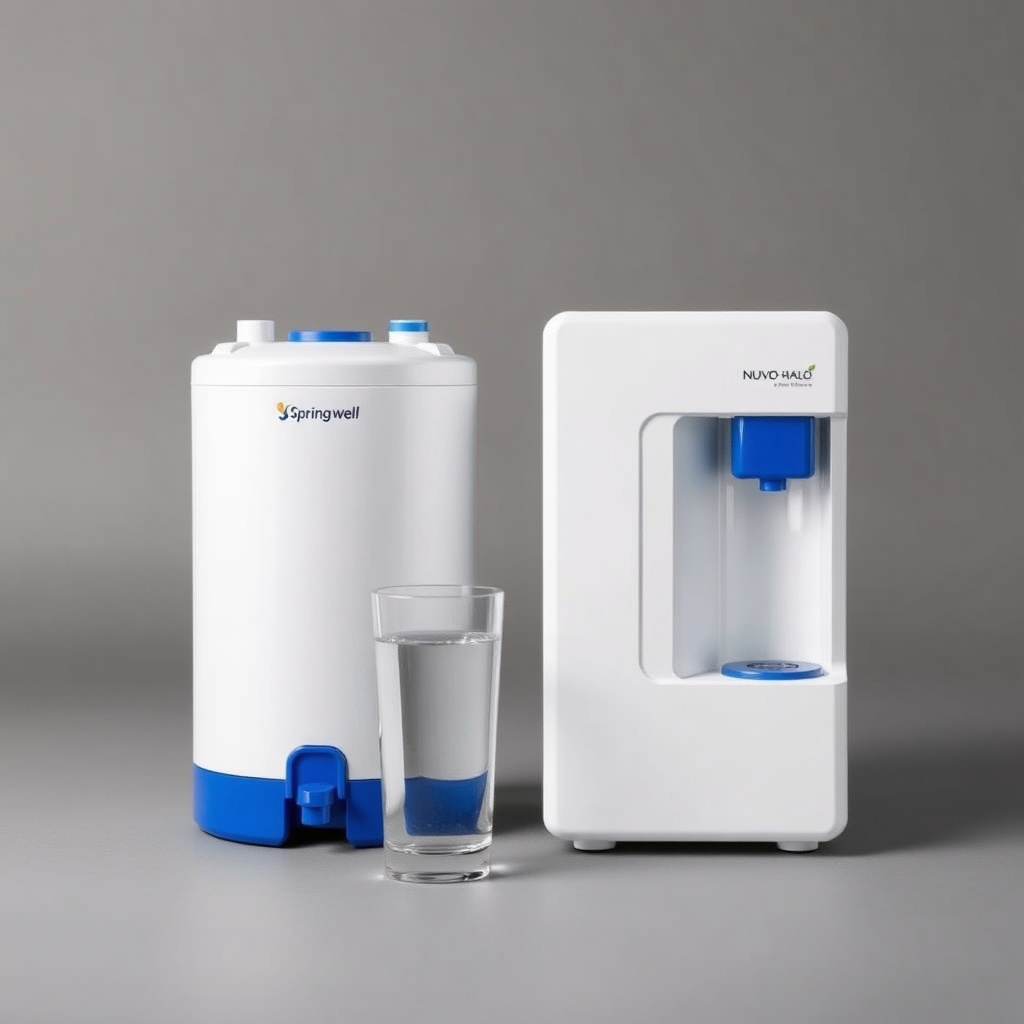
Maintenance costs play a decisive role in long-term ownership. SpringWell Futuresoft requires one cartridge replacement every three years. The replacement cartridge costs approximately $349.95 USD at standard retail pricing. That breaks down to roughly $116.65 per year. No additional chemicals, water softener salt, or electricity are needed, and the system has no moving parts to fail.
Nuvo Halo requires cartridge replacements every six to nine months. Each cartridge costs about $99.95 USD, which means two to three replacements per year, totaling $199.90 to $299.85 annually. Additionally, Nuvo Halo may require more frequent pre-filter changes if sediment is present, adding roughly $30 to $60 per year for standard sediment cartridges.
Over a ten-year period, SpringWell Futuresoft owners spend around $1,166.50 on cartridges, while Nuvo Halo owners spend between $2,299 and $3,598 depending on water hardness and usage. The difference exceeds $2,000 in favor of SpringWell Futuresoft.
| Cost Category | SpringWell Futuresoft | Nuvo Halo |
|---|---|---|
| Initial unit price (typical) | $1,199.00 | $499.00 |
| Cartridge replacement frequency | Every 3 years | Every 6–9 months |
| Annual cartridge cost | $116.65 | $199.90–$299.85 |
| 10-year total (unit + cartridges) | $2,365.50 | $2,798–$4,097 |
| Warranty coverage | Limited lifetime | 2 years |
How Do Flow Rates and Water Pressure Compare?
Hard water conditioners must handle household demand without creating noticeable pressure drops. SpringWell Futuresoft is designed for whole-house flow rates up to 12 gallons per minute (GPM) in standard models, with larger units available for homes up to 20 GPM. Testing shows minimal pressure loss—typically less than 0.5 PSI when installed with proper pipe sizing. The TAC media bed does not restrict flow like ion-exchange resin beds.
Nuvo Halo operates at a maximum flow rate of 8 GPM for the standard model. This figure drops if the cartridge is nearing exhaustion or if pre-filters become clogged. Pressure loss can range from 1 to 3 PSI depending on plumbing configuration and cartridge condition. Homes with multiple simultaneous draws (showers, washing machine, dishwasher) may experience slight pressure fluctuations with Nuvo Halo.
For homes exceeding 8 GPM demand, SpringWell Futuresoft offers a clear performance edge. Those curious about flow rate specifics should check the SpringWell Futuresoft Flow Rate Testing: Does It Affect Water Pressure? guide for detailed metrics.
What Are the Installation Requirements and Complexity?
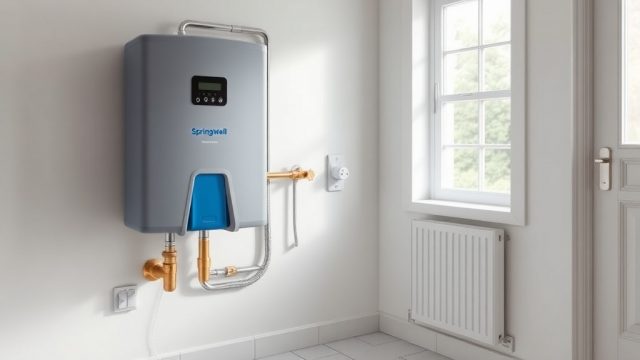
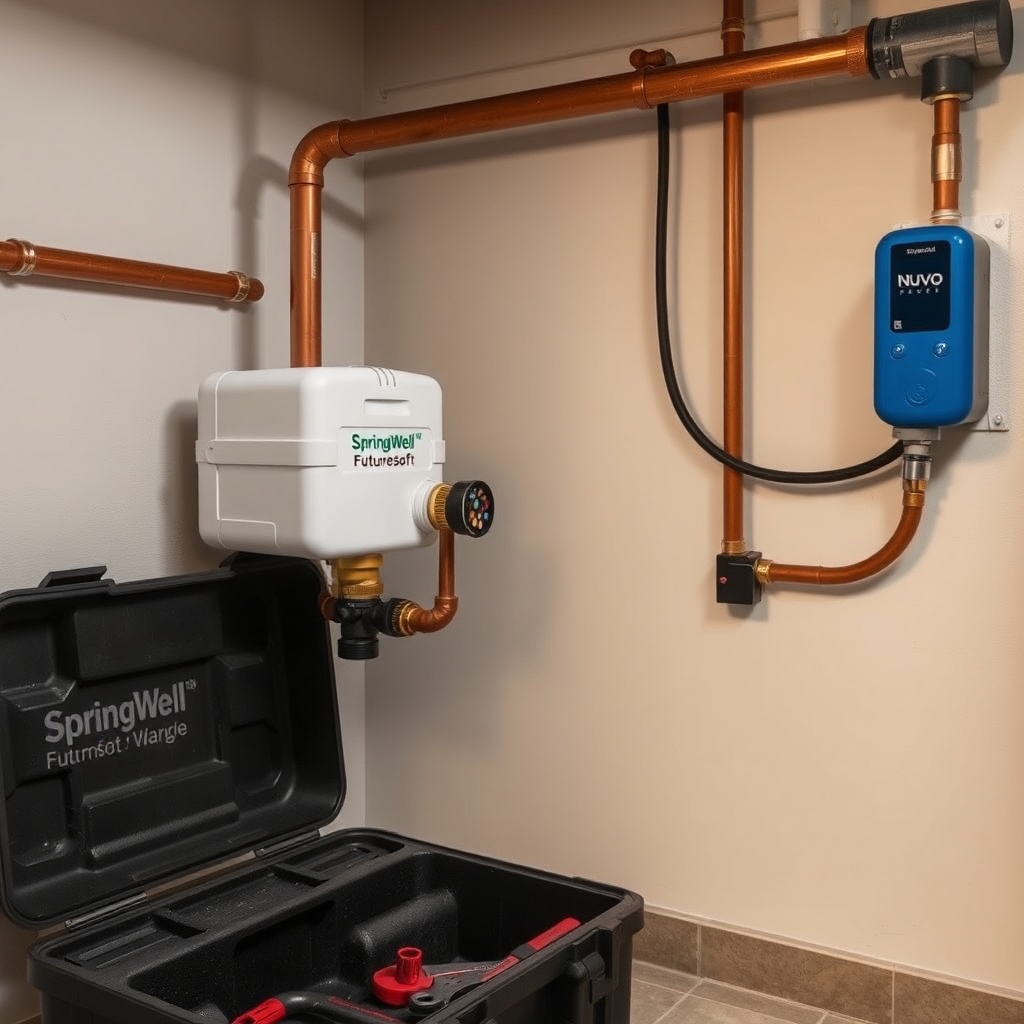
Both systems are designed for DIY installation, but the effort differs. SpringWell Futuresoft is a whole-house system that requires cutting into the main water line, typically after the pressure tank for well water or after the main shutoff for municipal water. The unit includes a bypass valve and comes with pre-assembled components. A basic homeowner with plumbing experience can complete installation in two to three hours.
Nuvo Halo is a point-of-entry system that mounts directly to the main water line using compression fittings. It is more compact, fitting into tight spaces like under sinks or in utility closets. Installation takes about 30 to 60 minutes and requires only basic tools. However, Nuvo Halo must be installed before any water heater or boiler, and its cartridge must be replaced when the indicator light turns orange.
The trade-off is clear: Nuvo Halo offers faster, simpler installation, but SpringWell Futuresoft provides a more permanent solution with less frequent maintenance. For those wanting to optimize setup, the SpringWell Futuresoft Installation Tips: Optimize Your Salt-Free Conditioner Setup guide covers positioning, bypass configuration, and pressure testing.
How Do They Perform with Well Water vs Municipal Water?
Source water chemistry affects performance dramatically. SpringWell Futuresoft handles well water up to 25 grains per gallon (gpg) hardness effectively, but it requires iron levels below 1 ppm or pre-treatment. The TAC media can manage organic matter and moderate sediment without clogging. Annual cleaning of the pre-filter and periodic flushing of the media bed maintain efficiency. Detailed maintenance steps are available in the SpringWell Futuresoft Maintenance Checklist: Extend the Life of Your Conditioner.
Nuvo Halo works best with municipal water that has hardness below 20 gpg and iron below 0.5 ppm. Well water with high iron or manganese often causes the citric acid chelation to become less effective, requiring more frequent cartridge changes and potential staining. Pre-filtration is strongly recommended for well water users.
For mixed-hardness well water, SpringWell Futuresoft offers broader tolerance. Those on municipal water with moderate hardness may find Nuvo Halo sufficient, especially if space or budget limits the initial investment. But for long-term reliability across varying water quality, SpringWell Futuresoft remains the safer bet.
What About Environmental Impact and Water Waste?
Both systems are salt-free and produce zero brine discharge, making them eco-friendlier than traditional softeners. SpringWell Futuresoft uses no chemicals, so its wastewater is zero, and the spent cartridge material is non-hazardous and recyclable through manufacturer programs. The TAC beads themselves last three years before disposal.
Nuvo Halo uses citric acid, which is biodegradable, but the chelation process releases small amounts of spent citric acid into the wastewater stream. While not harmful, it contributes a minor chemical load to septic systems or municipal treatment plants. Additionally, the frequent cartridge replacements generate more plastic waste than SpringWell Futuresoft’s longer-lasting cartridges.
For environmentally conscious buyers, the lower waste volume of SpringWell Futuresoft (one cartridge every three years vs. two or three per year for Nuvo Halo) reduces landfill impact by 50% to 75% over a decade.
What Owners Say
Real-world feedback from homeowners who have used both systems reveals consistent themes. SpringWell Futuresoft owners praise the lack of maintenance and consistent water feel. One user with a 4,000-square-foot home and 22 gpg hardness reported, “After three years, no scale buildup, and my water pressure never dropped.” Another owner noted that the system “installed cleanly and the cartridge lasts forever compared to other brands.”
Nuvo Halo owners often highlight the low initial cost and compact size. A typical review states, “Great for our small condo—easy to install and we noticed less spotting on dishes.” However, the same owner added, “We had to replace the cartridge every seven months, and the cost adds up. Wish it lasted longer.” Hardness spikes or high usage accelerate cartridge depletion, a complaint seen in multiple forums.
For those considering long-term ownership, reading the SpringWell Futuresoft vs Aquasure Harmony Series: Which Salt-Free Conditioner Wins? comparison adds another view for evaluating salt-free options.
Frequently Asked Questions
1. Does SpringWell Futuresoft reduce total dissolved solids (TDS)?
No. TAC technology does not remove TDS; it crystallizes hardness minerals without stripping them. If TDS reduction matters, consider an RO system. See the SpringWell Futuresoft TDS Removal Test: Does It Reduce Total Dissolved Solids? for detailed test results.
2. Can Nuvo Halo be used with a well water system?
Yes, but only if the well water has iron below 0.5 ppm and hardness below 20 gpg. Pre-filtration for sediment and iron removal is strongly recommended to avoid rapid cartridge exhaustion.
3. Which system is better for a large family home?
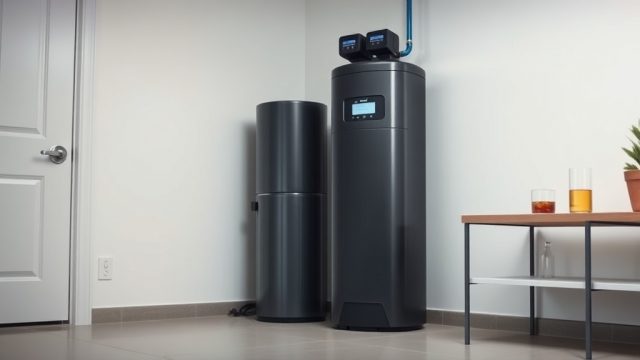
SpringWell Futuresoft supports higher flow rates (up to 12 GPM standard, 20 GPM with larger models) and longer cartridge life, making it ideal for homes with four or more people. Nuvo Halo suits smaller households with lower water usage.
4. Do I need a plumber to install these conditioners?
Both are DIY-friendly, but SpringWell Futuresoft requires cutting the main water line, which may intimidate some homeowners. Nuvo Halo uses compression fittings for easier installation. A handyman or plumber is optional for either.
5. How do these compare to a traditional salt-based softener?
Both conditioners are salt-free and produce no brine discharge, but they do not remove mineral content. Traditional salt-based softeners remove hardness via ion exchange, leaving softened water without calcium or magnesium. Each has trade-offs regarding water chemistry, taste, and cost. For a direct competitor comparison, read the SpringWell Futuresoft vs HUM Conditioner: Long-Term Cost Comparison.
6. Is there any warranty difference?
Yes. SpringWell Futuresoft offers a limited lifetime warranty covering the housing and media tank, with the cartridge covered for three years. Nuvo Halo provides a 2-year warranty on the unit. SpringWell’s warranty reflects greater confidence in product longevity.