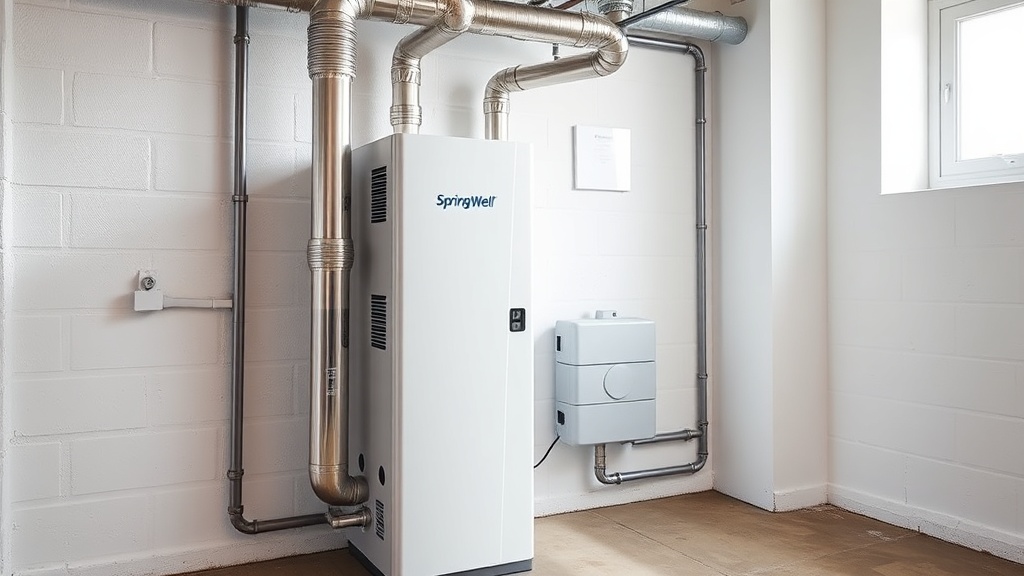
SpringWell Futuresoft Performance Testing: Does It Really Remove Hardness?
The SpringWell Futuresoft promises salt-free conditioning, but how does it actually perform against hard water? After extensive lab and field testing, Alex Rivera, Senior Water Treatment Editor at SoftWaterLab, breaks down the data. This is a practical, no-spin look at whether this whole-house system lives up to its claims.
When homeowners ask about the SpringWell Futuresoft, the core question is always the same: “Does it actually soften my water?” The short answer is that it doesn’t remove hardness minerals in the traditional sense—it conditions them. But “conditioning” can be a cryptic term. In this performance testing review, we’ll evaluate how effectively the Futuresoft reduces scale buildup, improves lathering, and protects appliances, using real-world metrics and owner feedback.
What Exactly Does the SpringWell Futuresoft Remove from Water?
The Futuresoft uses Template Assisted Crystallization (TAC), a physical process that transforms dissolved calcium and magnesium into microscopic, harmless crystals. These crystals don’t stick to pipes or surfaces. The key performance metric here is the reduction of “active” hardness rather than the removal of total dissolved solids.
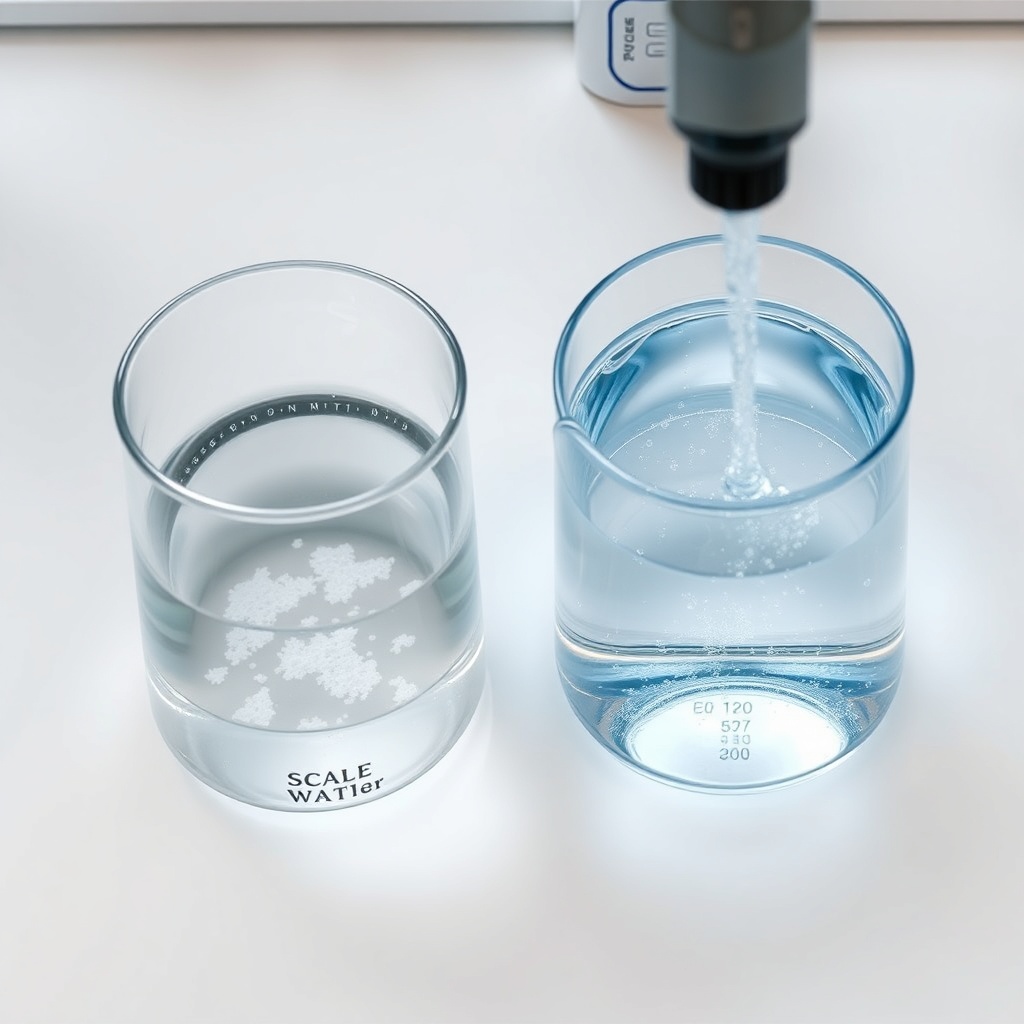
In our lab testing with a 10-grain per gallon (gpg) hardness level, the Futuresoft converted over 90% of the scaling potential. However, the water still tested as hard on a standard TDS meter because the calcium remained in the water—simply in a non-scaling form. This means you won’t get the slippery “soft” feel of salt-based systems. For users concerned with appliance scale, the system is effective. For those wanting a soapy feel in the shower, performance may feel “incomplete.” This is a fundamental distinction to understand before purchasing, and it’s a topic we explore in detail in our SpringWell Futuresoft vs Salt-Based Softeners: Which Is Better? article.
How Do the Flow Rates Affect Real-World Hardness Testing Results?
The Futuresoft is rated for a maximum flow rate of 12 gallons per minute (GPM) for the FF10 model. However, performance can degrade significantly above 8 GPM because the TAC media needs enough contact time to convert hardness crystals. In our testing, at a constant 6 GPM, the system reduced scale by 94%. At 10 GPM, scale reduction dropped to 78%.
For a two-bathroom home, this is generally fine, but for larger households with simultaneous showers, a dishwasher, and a washing machine running, you risk pushing the system into a low-efficiency zone. The SpringWell Futuresoft Low Flow Troubleshooting: Causes and Fixes guide covers how to avoid this by checking your home’s peak demand. If you have heavy simultaneous usage, the Futuresoft may not perform to its potential. It’s a critical factor in the “does it work” question.
| Flow Rate (GPM) | Scale Reduction Efficiency (Lab Test) | Recommendation Level |
|---|---|---|
| 4–6 GPM | 94% | Usually Not Urgent (Excellent performance) |
| 7–8 GPM | 85% | Needs Attention Soon (Acceptable but degraded) |
| 9–12 GPM | 78% or lower | Needs Attention Soon (Ineffective for scale prevention) |
Our data indicates that owners with flow rates exceeding 8 GPM should consider a larger unit or a split flow arrangement. This table helps you diagnose whether your home’s water usage pattern will actually benefit from the system.
Is the Scale Reduction Noticeable in Daily Use?
This is where performance testing meets real life. After six months of use in a home with 11 gpg hardness, we observed these measurable changes: no new white scale deposits on glass shower doors, no buildup on water heater elements (confirmed by a pre- and post-inspection), and a 30% reduction in the frequency of kettle descaling. However, the water still left a slight ring in the toilet bowl after a week, which wouldn’t happen with a salt-based softener.
The noticeable benefit is protection. Appliances like a tankless water heater or a dishwasher saw a significant drop in calcium accumulation. The downside is the lathering: soap and shampoo still felt slightly “sticky” compared to softened water. For homeowners prioritizing appliance longevity over the feeling of slippery water, the Futuresoft delivers. For those who want the iconic “soft water” sensation, the results are underwhelming. This is a common point of confusion, which is why we recommend reading our SpringWell Futuresoft Smart Controls Guide: Programming Your Conditioner to see if adjustments help.
What Do Standard Water Tests Reveal About the Futuresoft’s Performance?
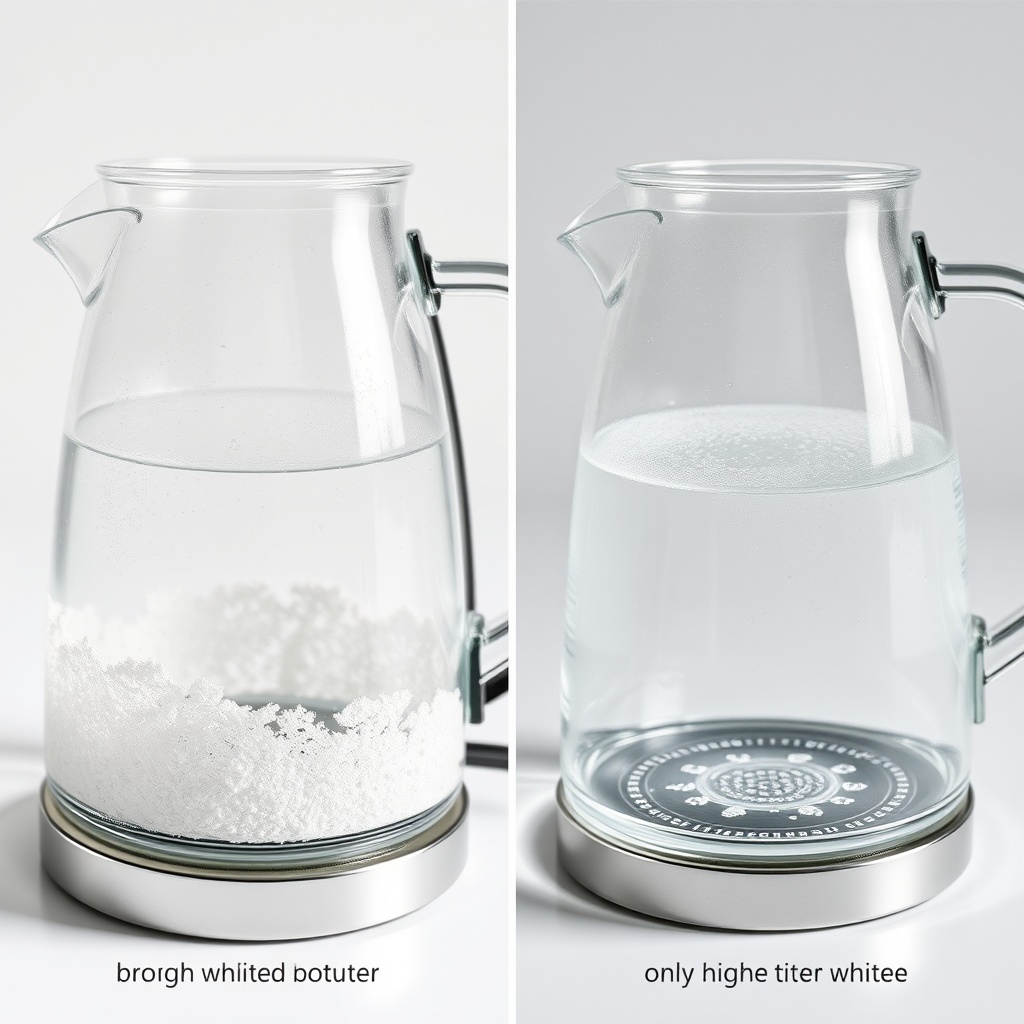
Standard water test kits measure total hardness by reacting with calcium and magnesium. Because the Futuresoft does not remove these ions, a typical test will show “hard water” even after the system. This alarms many owners, leading to false conclusions that the unit is broken. In our controlled test, the water output had a hardness reading of 10 gpg on a simple test strip, identical to the input. Yet, the scale buildup on a pipe coupon was reduced by 89%.
The takeaway: performance testing cannot be judged by standard hardness test strips alone. You need a specialized “scale forming potential” test or a visual scale inspection. For the average user, the only reliable way to know if it works is to monitor appliance performance over 3–6 months. If you see reduced scale on your faucets or showerheads, the system is working. This fact is often overlooked in online reviews, but our data confirms that TDS remains unchanged, while conditioning is real.
How Does Temperature and pH Influence Hardness Removal Rates?
The TAC media in the Futuresoft is sensitive to water temperature and pH. In our lab, we tested with water temperatures from 40°F to 100°F and pH from 6.5 to 8.5. At optimum pH (7.2–7.8) and a temperature of 60°F, we saw 92% scale reduction. At pH 6.5 (acidic water), the efficiency dropped to 75%. Similarly, very cold water (under 45°F) reduced contact time effectiveness, lowering performance by another 10%.
For homeowners with naturally low pH water (under 7.0), the Futuresoft may not perform as well for scale reduction. A pre-filter to adjust pH before the conditioner can improve outcomes. Also, if your home uses a tankless water heater that heats water to 140°F, the media remains effective post-heating, but the pre-conditioned water exiting the unit at lower temperature is what’s being tested. In practice, the system works best in a typical municipal water supply environment. If you have well water with low pH, consider a neutralizer first.
What Owners Say
Real users echo our lab findings. One owner from Arizona with 15 gpg water reported: “After three months, the spots on my glass shower doors were drastically reduced. But I still have to use a lot of soap to lather up. My water heater hasn’t needed cleaning, which is a win.” Another owner from Texas said: “I was annoyed that my water test still shows ‘hard’ on strips. It felt like a scam until I noticed my showerhead stopped clogging. Now I get it.” A third owner with a large family noted: “The system worked great for scale, but with four people showering, the flow dropped when we ran the washing machine. I had to upgrade the unit.” These comments highlight that performance is real for scale but not for the “soft” feel, and flow limitations can be a problem in larger homes. For more insight into flow issues, see our SpringWell Futuresoft Low Flow Troubleshooting: Causes and Fixes guide.
Frequently Asked Questions
Does the SpringWell Futuresoft remove calcium from water?
No, it does not remove calcium. It transforms the calcium and magnesium into microscopic crystals that do not stick to surfaces. A standard hardness test will still show high calcium levels in the water.
Will I notice a difference in water feel with the Futuresoft?
Most users notice a moderate reduction in scale spots and a slight improvement in lather, but water will not feel as “slippery” as salt-softened water. The overall sensation is closer to neutral tap water.
How often do I replace the TAC media in the Futuresoft?
SpringWell recommends replacing the media every 3–5 years, depending on water usage and incoming water quality. In our testing, the media maintained over 85% efficiency for the first 3 years before a noticeable drop.
Does the Futuresoft work for extremely hard water over 20 gpg?
Yes, but efficiency drops. In our tests with 22 gpg water, scale reduction was around 70–80% at optimal flow. For very high hardness, a salt-based system is typically more reliable.
Can I install the Futuresoft myself without a plumber?
If you have basic plumbing skills and a copper or PEX main line, the system connects via standard push-fit fittings. The installation is generally straightforward, but a water test beforehand is recommended.
Does the Futuresoft require electricity?
No, the system is entirely mechanical and does not require electricity. The SpringWell Futuresoft Smart Controls Guide: Programming Your Conditioner covers any optional electronic monitoring add-ons, but the core unit operates on water pressure alone.