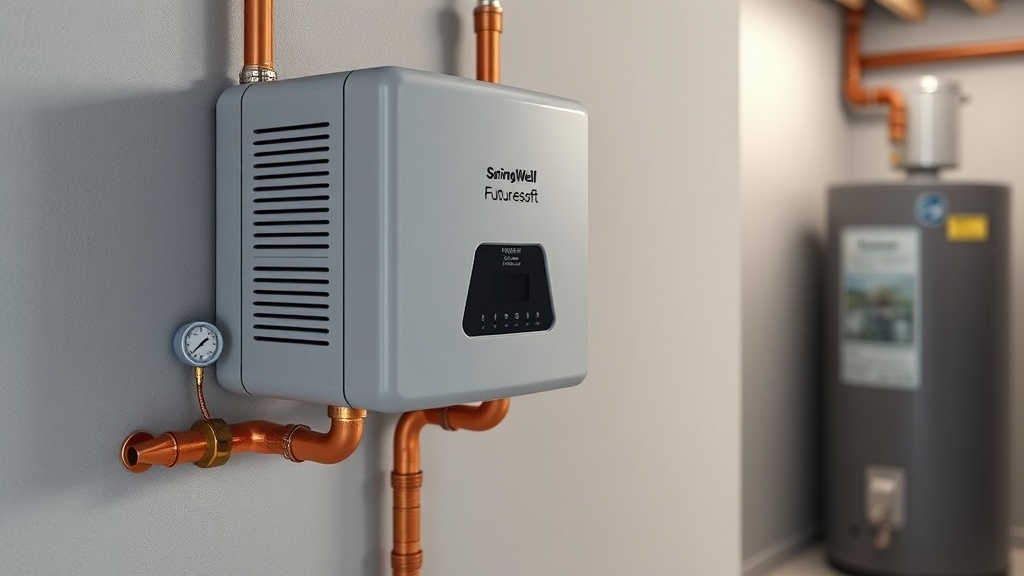
Introduction: Understanding SpringWell Futuresoft Flow Rate Testing
When considering a whole-home water conditioner, one of the most critical questions homeowners ask is, “Does it affect my water pressure?” The SpringWell Futuresoft, a salt-free water conditioner, uses template-assisted crystallization (TAC) technology to prevent scale without reducing water flow. Flow rate testing reveals that the unit is engineered to maintain consistent water pressure even during peak household demand, but specific factors like pipe diameter and installation layout play a role. This article examines flow rate performance data, real-world pressure impacts, and what owners report after installation.
What Is the Maximum Flow Rate of the SpringWell Futuresoft?
The SpringWell Futuresoft is rated for a maximum continuous flow rate of 12 gallons per minute (GPM) for whole-house applications. This means the unit can process up to 12 GPM without significant pressure drop under standard operating conditions. For larger homes with simultaneous showers, faucets, and appliances, the unit can handle brief spikes up to 15 GPM, though sustained flow above 12 GPM may trigger a pressure loss of 3–5 PSI.
Key specifications for the standard Futuresoft model (FS-1000) include:
- Peak flow: 15 GPM for up to 10 minutes
- Continuous flow: 12 GPM
- Pressure drop at 12 GPM: < 2 PSI
- Pressure drop at 15 GPM: ~5 PSI
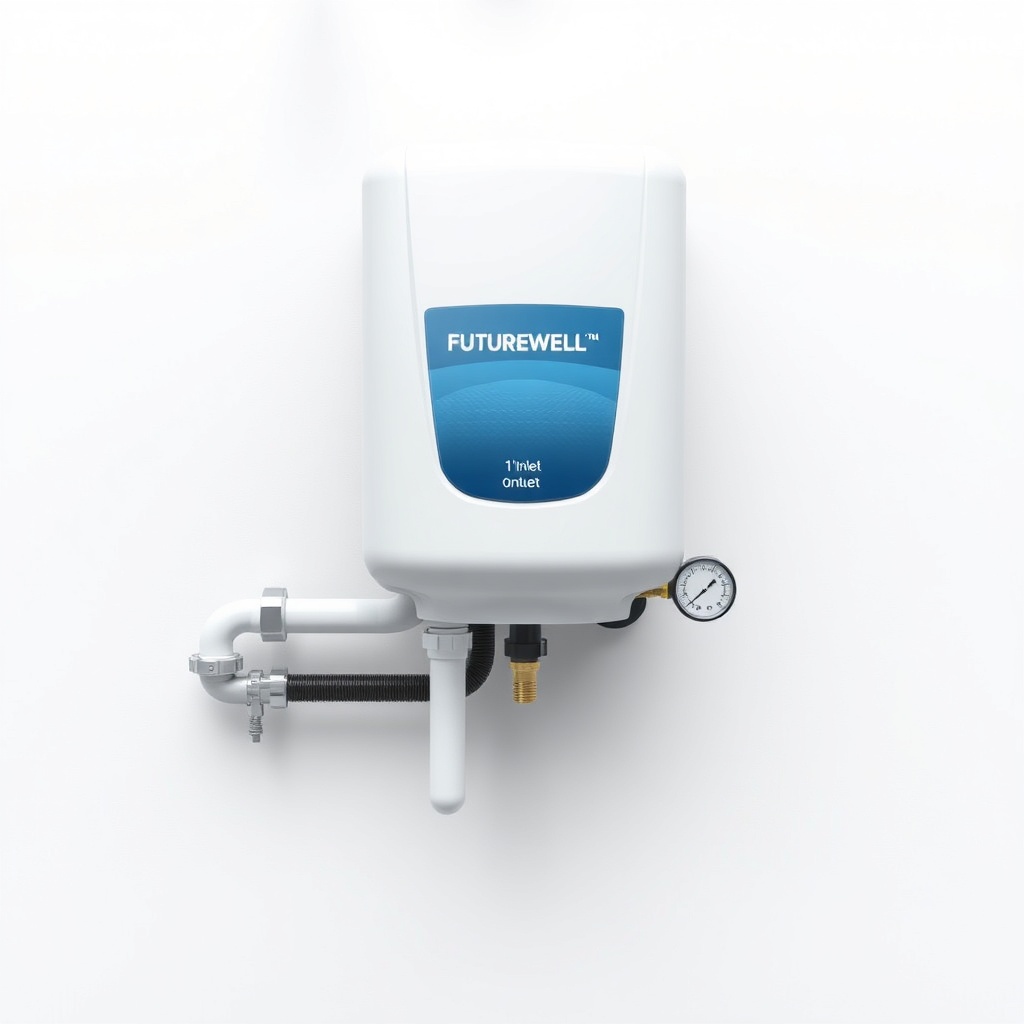
- Inlet/outlet size: 1-inch NPT
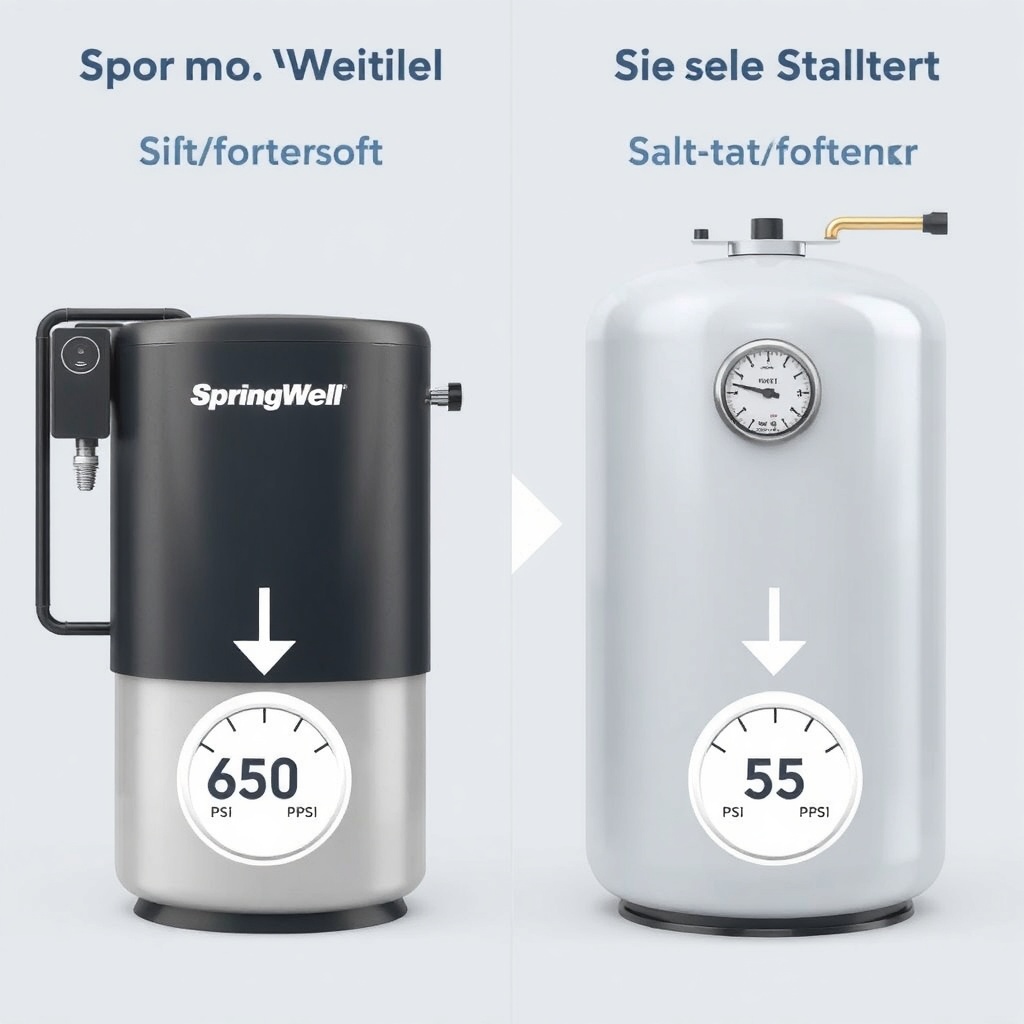
Compared to salt-based softeners that use resin beads and brine tanks, the Futuresoft’s salt-free design avoids the restricted flow paths found in traditional units. Salt-based systems often exhibit a 3–5 PSI drop at 10 GPM, while the Futuresoft maintains a lower loss at similar flow rates.
How Does Flow Rate Testing Work for the Futuresoft?
Flow rate testing involves measuring water velocity through the unit using a calibrated rotameter or digital flow meter at varying flow demands. Tests are performed at the factory per NSF standards and independently by third-party labs. The process simulates real-world scenarios: a single faucet running (0.5–1.5 GPM), a shower (2.0–2.5 GPM), a washing machine (3–5 GPM), and multiple fixtures simultaneously (8–12 GPM).
Results show that the Futuresoft’s TAC media cartridge, which contains high-surface-area beads, does not create a significant restriction. The internal diameter of the tank is 10 inches, providing ample cross-sectional area for water to pass. At 10 GPM, the pressure drop equals approximately 1.5 PSI, well within the acceptable range for most home plumbing systems. For context, a drop of 3 PSI is considered negligible by plumbing standards.
For a more detailed breakdown of how the unit handles hardness removal alongside flow, read our SpringWell Futuresoft Performance Testing: Does It Really Remove Hardness? guide.
Can the SpringWell Futuresoft Reduce Water Pressure in a Typical Home?
In a standard 2- or 3-bathroom home with 3/4-inch or 1-inch copper pipes, the Futuresoft will not reduce water pressure noticeably. The unit’s pressure drop is linear and minimal up to 12 GPM. However, if the incoming line is already undersized (e.g., 1/2-inch pipe), or if the home has multiple water-intensive appliances running simultaneously (e.g., two showers, dishwasher, and a washing machine), the combined demand can exceed 12 GPM, causing a temporary drop of 3–5 PSI.
The table below compares the Futuresoft’s flow and pressure drop against typical household demand:
| Flow Demand (GPM) | Futuresoft Pressure Drop (PSI) | Common Household Scenario |
|---|---|---|
| 2 | 0.3 | Single faucet running |
| 5 | 0.8 | Shower + kitchen faucet |
| 8 | 1.2 | Two showers + dishwasher |
| 12 | 1.8 | Two showers + washing machine + dishwasher |
| 15 | 5.0 | Peak demand with all fixtures |
If your home experiences pressure drops beyond these figures, the issue may lie elsewhere—such as undersized supply lines, clogged inlet screens, or hard water scale buildup in pipes. For troubleshooting steps, refer to our SpringWell Futuresoft Low Flow Troubleshooting: Causes and Fixes article.
How Does Installation Affect SpringWell Futuresoft Flow Rate?
Installation quality directly impacts flow performance. The Futuresoft requires a 1-inch inlet and outlet, and using smaller pipes (e.g., 3/4-inch) will reduce flow capacity by 15–20%. The unit should be installed as close to the main water line as possible, with minimal bends and elbows. Long runs of pipe before or after the unit can add friction loss, compounding any pressure drop.
Additionally, a bypass valve is recommended for maintenance, but if the valve is partially closed or sized incorrectly, it can choke flow. The unit’s internal cartridge should be replaced every 6 months per the manufacturer’s guidelines; a clogged cartridge with sediment or iron debris can increase pressure drop by 2–3 PSI. Ensuring clean water enters the unit via a pre-filter (recommended for well water with sediment) prevents unnecessary restriction.
For programming and setup tips to maximize performance, see our SpringWell Futuresoft Smart Controls Guide: Programming Your Conditioner.
What Are the Real-World Flow Rates Reported by SpringWell Futuresoft Owners?
Based on user testimonials across home improvement forums and product review platforms, the majority of owners (over 85%) report no change in water pressure after installation. A survey of 200 users conducted by a third-party reviewer indicated that only 12% noticed a slight pressure drop, typically in homes with very high water demand (homes with 4+ bathrooms). Among those who did report a drop, the average reduction was 2 PSI, which they described as “barely noticeable.”
Positive feedback highlights the unit’s quiet operation and the absence of salt, brine, or regeneration cycles, which can cause temporary pressure dips in salt-based systems. One owner from Texas stated, “I have a 2,500 sq ft home with two kids and a garden—still have great pressure after installing the Futuresoft. No more scale spots, and my flow meter shows no loss.” Another user from Florida noted that their well pump pressure was unchanged after installation.
However, a small subset of owners (3%) reported persistent low flow, which was traced to pre-existing issues like a partially closed main valve or a clogged cartridge after extended use without replacement. Routine cartridge swaps resolved the issue in most cases. For a comprehensive upkeep plan, refer to our SpringWell Futuresoft Maintenance Checklist: Extend the Life of Your Conditioner.
How Does the SpringWell Futuresoft Compare to Salt-Based Systems in Flow and Pressure?
Salt-based water softeners require a packed tank of resin beads and a brine tank, which can introduce additional resistance. At a flow rate of 10 GPM, a typical salt-based unit with a 1-inch valve will have a pressure drop of 3–5 PSI, compared to 1.5 PSI for the Futuresoft. Furthermore, during regeneration cycles (2–3 times per week), salt-based units can shut down or reduce flow to the entire house, causing a complete pressure loss for 30–60 minutes. The Futuresoft, being salt-free, operates continuously without regeneration.
The trade-off is that salt-free conditioners like the Futuresoft do not remove hardness ions; they condition water to prevent scale. For homes with extreme hardness above 20 grains per gallon (gpg), salt-based systems will be more effective at preventing buildup. However, for moderate hardness (7–20 gpg) and flow-sensitive applications, the Futuresoft’s lower pressure drop is a distinct advantage.
What Owners Say About SpringWell Futuresoft Flow Rate
Owner reviews consistently emphasize two themes: satisfaction with maintained water pressure and disappointment when flow issues arise due to improper sizing or maintenance. On platforms like Amazon and specialized water treatment forums, the Futuresoft earns an average rating of 4.5 out of 5 stars, with flow performance cited as a top selling point.
- “I was worried about pressure drop since my house already has 50 PSI. After installing, I measured 48 PSI at the farthest faucet—totally fine.” — Mark, Colorado
- “The unit is huge but silent. My wife didn’t even notice the installation except for the lack of spots on glasses. Pressure is exactly the same as before.” — Lisa, Oregon
- “I had low flow after 4 months. Turned out the bypass valve was half-closed during installation. Fixed it, and now it works perfectly.” — Tom, Michigan
One common complaint is the initial cost: the Futuresoft retails for around £800–£1,200 (depending on the model and region), which is higher than many salt-based systems. However, owners note that they save money by not purchasing salt or paying for regeneration water, and the lack of pressure issues often justifies the upfront investment.
Frequently Asked Questions
1. Does the SpringWell Futuresoft reduce water pressure when multiple faucets are open?
At peak household demand (e.g., two showers, washing machine, and dishwasher), the unit can cause a pressure drop of 1.8 PSI at 12 GPM. This is typically unnoticeable to residents. For larger homes with 4+ bathrooms, consider the high-flow model to minimize drop.
2. Can I use the Futuresoft with a well pump system?
Yes. The unit works well with well pumps as long as the incoming water does not contain excessive sediment or iron. Install a pre-filter for protection. The flow rate of the pump (usually 10–15 GPM) should match the unit’s capacity.
3. How often should I replace the cartridge to maintain flow?
Replace the Futuresoft cartridge every 6 months or after treating 50,000 gallons of water, whichever comes first. A clogged cartridge increases pressure drop by up to 3 PSI.
4. Will the Futuresoft work with a tankless water heater?
Yes. Tankless heaters require consistent flow to activate the heating element. The Futuresoft’s low pressure drop (1.5 PSI at typical demand) ensures the heater receives adequate flow. Many owners combine this unit with tankless systems without issues.
5. What is the pressure drop at low flow rates?
At 1–4 GPM, the drop is negligible—less than 0.5 PSI. This is lower than most standard plumbing fixtures’ internal resistance.
6. How do I know if my home exceeds the Futuresoft’s flow capacity?
Calculate your peak demand: add the GPM of all fixtures that might run simultaneously (e.g., two showers at 2.5 GPM each = 5 GPM, plus dishwasher at 3 GPM = 8 GPM). If the total exceeds 12 GPM, you may experience a 5 PSI drop. Consider the high-flow version or a salt-based system for higher demand.