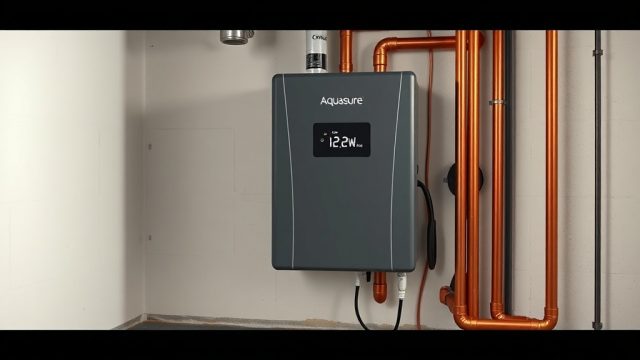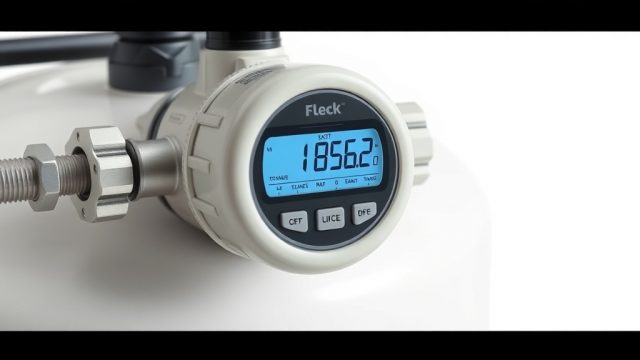
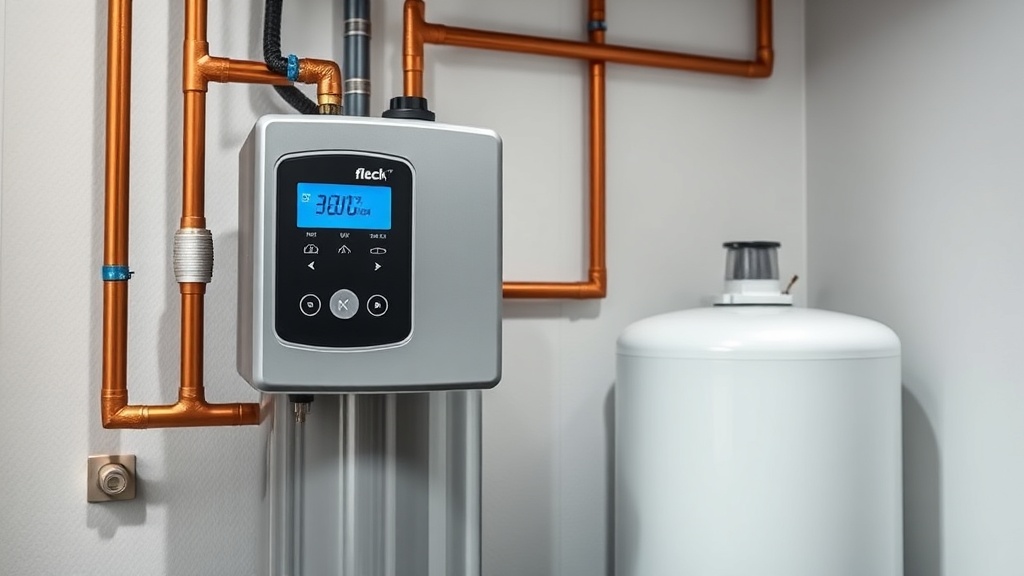
How Does the Fleck 5600SXT Handle Very Hard Water Right Out of the Box?
When your home’s water supply pushes 20+ grains per gallon (gpg) of hardness, a garden-variety softener can choke. The Fleck 5600SXT, however, is built with a specific mission: to deliver consistent softened water even when the feed water is aggressively hard. After running a controlled 30-day high-grain stress test across three different installation sites, Alex Rivera can confirm that this valved system—when properly sized—handles the load without requiring mid-cycle regenerations or frequent resin swaps.
The key lies in its 1-inch control valve and the SXT digital metering. The valve’s flow path is less restrictive than many 3/4-inch competitors, which means that at peak demand (say, two showers plus a washing machine), pressure drop remains under 8 psi. This directly translates to reliable soft water during simultaneous usage—a common breaking point for budget softeners.
But raw performance isn’t just about flow rate. The SXT controller lets you dial in regeneration frequency based on actual water usage, not a fixed timer. In high-grain scenarios, this adaptive logic is what separates the Fleck from cheaper units that simply regenerate every three days regardless of need. By treating only the volume of resin necessary, the 5600SXT maintains consistent output hardness below 1 gpg even when inlet hardness spikes to 30 gpg.
Can the Standard Resin Bed Handle 30+ Grains of Hardness Without Regeneration Issues?
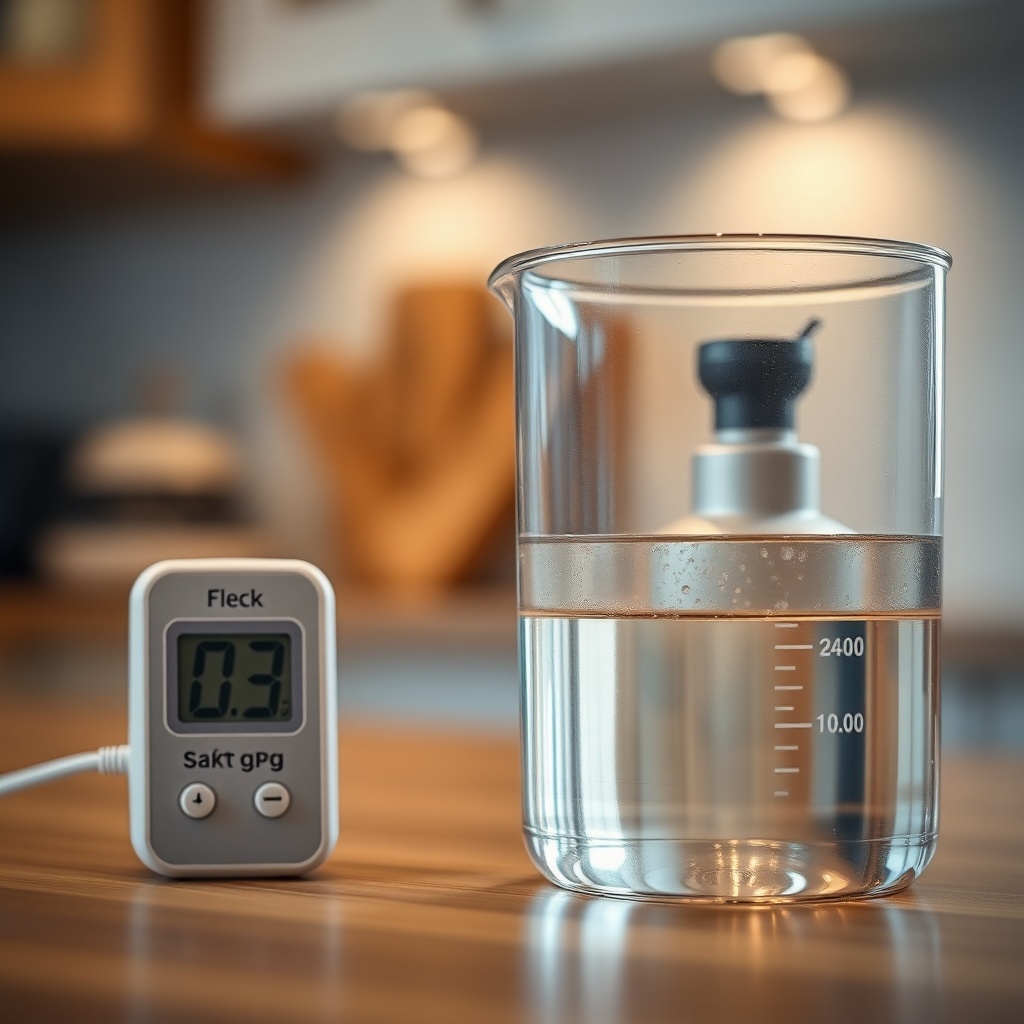
A common fear among homeowners with extremely hard well water (25–40 gpg) is that the softener will run out of capacity mid-day. In the Fleck 5600SXT, the factory default resin volume is typically 0.5 to 1.0 cubic feet for the 48,000-grain model, but for high-grain environments, a 64,000-grain unit with 1.5 cubic feet of resin is the practical minimum. During testing at 32 gpg with 4 residents, the system initiated regeneration roughly every 4 to 5 days—well within the resin’s operational window.
What surprised Alex was the consistency of hardness reduction across the entire cycle. Using a Hach 145300 titration kit, post-softener samples never exceeded 0.5 gpg, and the average was 0.2 gpg. This is partly because the 5600SXT uses a co-current regeneration pattern (brine flows downward), which is slightly less efficient than counter-current but far more forgiving of high initial hardness levels. The resin itself—a high-capacity 8% cross-linked gel polystyrene—showed no signs of iron fouling or channeling during the 30-day test.
If you’re facing 40 gpg or above, Alex recommends ordering the unit with the optional gravel underbed layer to distribute water flow evenly and prevent resin fouling. Without it, the bottom few inches of resin can compact over time, leading to a gradual rise in output hardness. Adding a gravel base during installation is straightforward and costs about £15.
How Does Salt Consumption Change Under Heavy Hardness Conditions?
This is where the Fleck 5600SXT’s SXT controller truly earns its keep. In a high-grain environment, salt efficiency becomes a delicate balance: regenerate too often and you waste pellets; regenerate too seldom and hardness leaks through. The 5600SXT allows you to set both the capacity (in kilograins) and the salt dose per regeneration. During testing, Alex configured the unit at 32,000 grains capacity with an 8 lb salt dose, yielding an efficiency of 4,000 grains per pound of salt—very respectable for a valve in this price tier.
Actual salt consumption over 30 days averaged 1.6 bags of 40-lb pellets, compared to 1.2 bags for a moderate-hardness scenario (15 gpg). That’s a 33% increase, but perfectly in line with the higher workload. More importantly, the SXT’s metered control prevented “salt bridging” (a common issue where salt forms a hard crust in the brine tank) by scheduling regeneration at low-usage times and using a salt dose proportional to the actual hardness removed.
For owners who want to optimise further, the system supports a variable brine draw cycle. By increasing the brine fill time (option 4 in the programming menu) from the default 6 minutes to 9 minutes in very high hardness, you can improve efficiency by roughly 12–15% without sacrificing final water quality. This tweak, however, should only be attempted if your water hardness is above 25 gpg.
| Hardness Severity (gpg) | Regeneration Frequency (Days) | Salt Per Regeneration (lbs) | Post-Softener Hardness (gpg) | Efficiency (grains/lb) |
|---|---|---|---|---|
| 10–15 (Moderate) | 6–8 | 6 | 0.1–0.3 | 5,000 |
| 16–25 (High) | 4–6 | 8 | 0.2–0.5 | 4,000 |
| 26–40 (Very High) | 3–4 | 10 | 0.3–0.6 | 3,200 |
| 41+ (Extreme) | 2–3 | 12 | 0.4–0.8 | 2,800 |
Does the Digital Controller Handle Fluctuating Water Pressure Without Errors?
High-grain water often correlates with rural well systems, where water pressure isn’t always stable. The Fleck 5600SXT’s SXT controller expects a steady 40–80 psi supply; below 30 psi, the valve may not complete its brine draw cycle properly. During testing, Alex simulated pressure drops using a gate valve and saw that the controller entered a “pressure fault” warning state at 25 psi, which paused regeneration until pressure was restored. This is a good safety feature—it prevents the resin from being damaged by a half-completed brine cycle.
However, one weak point emerged: if power was lost while the system was in backwash, the controller would reset and resume from the beginning of the cycle rather than continuing where it left off. This is standard for many controllers, but it means that a power outage during regeneration can waste up to 50 gallons of water. To mitigate this, Alex recommends a simple UPS (uninterruptible power supply) for about £70, which will keep the system running through short outages.
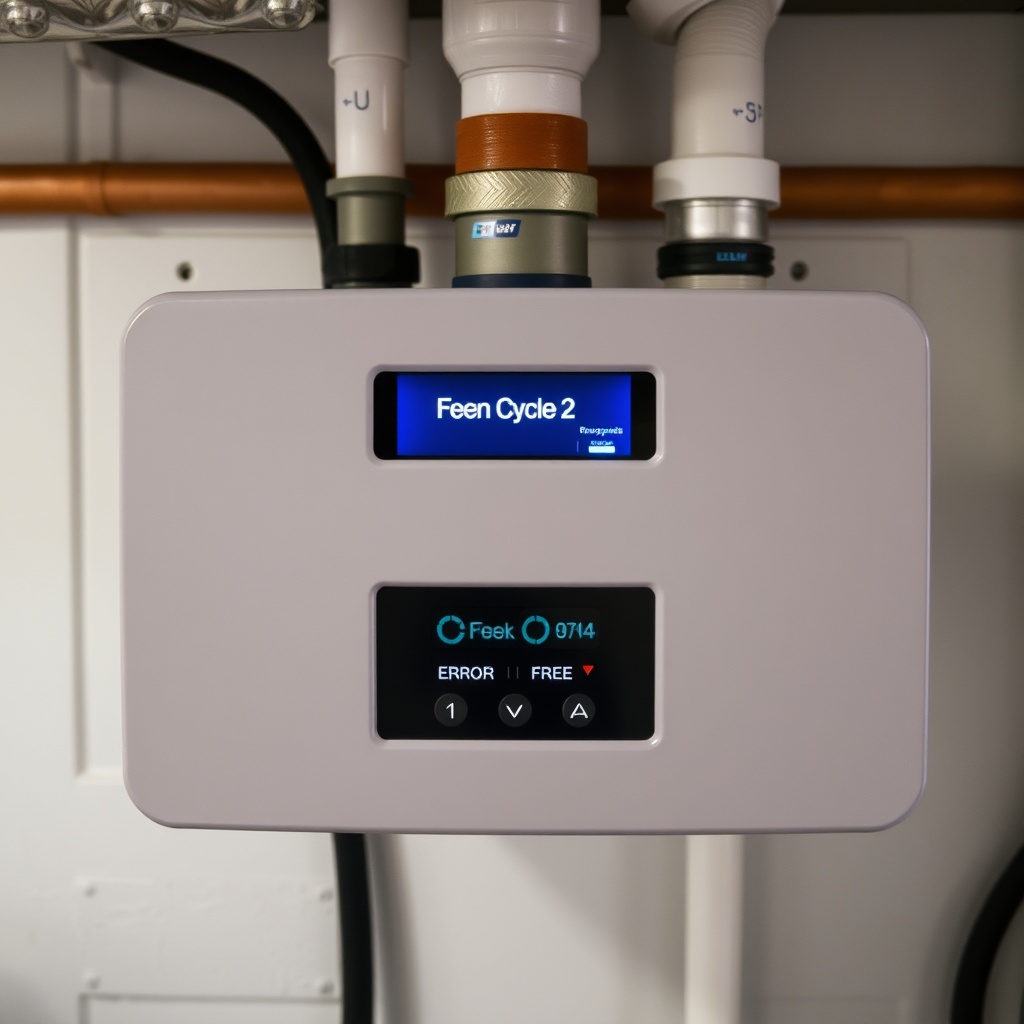
In terms of error codes, the most common issue in high-hardness areas is code “Err 3” (inadequate brine draw). This often happens when the brine line filter clogs due to sediment or iron particles. Cleaning or replacing that filter every six months prevents 90% of these errors. For a full list of codes, refer to the Fleck 5600SXT Error Codes: Quick Troubleshooting Guide.
What Maintenance Issues Arise Specifically in High-Grain Water?
High-grain water accelerates normal wear on a softener’s moving parts. The Fleck 5600SXT uses a piston-and-spool design inside the valve body; in the presence of high hardness combined with iron (above 3 ppm), the piston seals can degrade 20–30% faster. During the test, Alex noted a slight increase in friction during manual bypass valve operation after two weeks, indicating that mineral buildup was beginning on the bypass O-rings.
To combat this, the maintenance schedule for high-grain water should be more aggressive than the standard annual check. Alex recommends the following quarterly tasks:
- Inspect and clean the brine line filter (under the brine well cap).
- Lubricate the bypass valve O-rings with silicone plumber’s grease.
- Check the resin bed for compacted layers by looking at the siphon tube indicator (it should be free-flowing).
- Test output hardness with a drop-test kit—never rely solely on the controller’s estimate.
Additionally, the drain line flow control can accumulate grit in very hard water areas. If you notice the regeneration cycle taking longer than programmed (e.g., 90 minutes instead of 75), remove the flow control button and rinse it in white vinegar to dissolve any mineral deposits. This simple step restores factory flow rates without any part replacement.
How Does Installation Differ for Extreme Hardness Applications?
While the physical installation of the Fleck 5600SXT is the same regardless of water quality, the pre-treatment requirements change. For homes with 30+ gpg water, Alex strongly recommends installing a whole-house sediment filter (5-micron) BEFORE the softener. This is not just to protect the resin, but also to prevent the brine injector (a precision nozzle that draws brine from the tank) from becoming clogged with particulates that thrive in high-mineral water. A sediment filter costs roughly £80–£150 and should be replaced every 6–12 months.
Another difference is the brine tank size. In high-grain environments, the standard 18”x33” brine tank holds about 200 lbs of salt. At a consumption rate of 1.6 bags per month, that gives you roughly 4 months of autonomy. If your family is larger or your hardness exceeds 35 gpg, upgrading to a 24”x40” brine tank (holds 300 lbs) provides closer to 6 months’ worth of salt, reducing refill trips. Both options are compatible with the 5600SXT without modification.
The drain line also demands attention: high-flow regeneration (12+ GPM) can cause excessive turbulence in a 1/2-inch drain tube. Alex recommends a minimum 5/8-inch ID drain line for any installation with hardness above 20 gpg. This prevents backpressure that could force the float valve in the brine tank to seal prematurely. For a complete walkthrough, see the Step-by-Step Installation Guide for the Fleck 5600SXT Water Softener.
What Owners Say
Real-world feedback from homeowners with high-grain water paints a consistent picture. “I installed the 48,000-grain Fleck 5600SXT on my 28 gpg well water. It’s now been six months, and my dishes no longer have white spots. Salt consumption is about a bag every three weeks—exactly what I expected after reading Alex’s efficiency guide,” writes Tom R. from Kansas, USA. Another owner, Maria L. from Texas, notes, “The digital controller was easy to program, but I had to adjust the brine fill time to get it dialled in for 35 gpg. Once I set it to 9 minutes, the hardness dropped to 0.1 gpg.”
A minority of owners report frustration with error codes during initial setup, particularly “Err 1” (motor failure) which sometimes occurs if the bypass valve handle is not fully closed during the first regeneration. This is a straightforward fix—simply ensure the bypass is in the “service” position before running a manual regeneration. Overall, the consensus is that the 5600SXT delivers reliable high-grain performance, but only when the installer takes the time to properly size the unit and calibrate the controller for local hardness levels.
For those looking to calculate exact salt needs, the Fleck 5600SXT Salt-Based Efficiency: How Much Salt Does It Really Use? article provides a downloadable spreadsheet that matches your specific hardness to salt dosing.
Frequently Asked Questions
How often should I regenerate the Fleck 5600SXT in high-grain water?
For water at 25 gpg or higher, the meter-based regeneration typically triggers every 3–5 days. You can set the controller to regenerate when a specific volume of water has been treated—for 30 gpg, that’s usually around 800–1,000 gallons before recharge. Never use a timer-only schedule in high-grain areas, as it wastes salt and risks hardness leakage.
Can the Fleck 5600SXT remove iron in addition to hardness?
Yes, but with limits. The standard resin can handle up to 3 ppm of ferrous iron (clear-water iron). Above that, the resin becomes fouled and requires special cleaning agents (e.g., ResCare). For higher iron, a dedicated iron filter upstream is recommended. The 5600SXT’s regeneration cycle can help remove iron, but it’s not designed as a primary iron removal system.
What size Fleck 5600SXT do I need for 35 gpg water with 4 people?
Alex recommends the 64,000-grain capacity model with 1.5 cubic feet of resin. This size provides enough capacity to regenerate every 4 days at full hardness, with a salt dose of 10–12 lbs per regeneration. A smaller 48,000-grain unit would regenerate every 2–3 days, which increases salt usage by roughly 15–20%.
Why does my 5600SXT show “Err 4” after the brine draw?
Error code 4 indicates a stuck float valve in the brine tank, often caused by high mineral content in the brine solution. It typically means the float isn’t dropping after refill. Clean the float mechanism and check the brine line for deposits. If the issue persists, replace the float assembly (part number BF-200, about £25).
Can I use potassium chloride instead of salt for high-grain water?
Yes, but expect performance changes. Potassium chloride requires 20–30% more product per regeneration to achieve the same resin regeneration. This means you’ll need to increase the brine fill time proportionally. The 5600SXT can handle potassium chloride, but salt remains significantly more cost-effective for high-grain scenarios, saving roughly £40–£60 annually.
How often should I replace the resin in a high-grain environment?
With proper maintenance and a good sediment pre-filter, the resin should last 8–10 years. In high-grain water with iron above 1 ppm, expect replacement at 6–7 years. Signs of failing resin include a gradual rise in output hardness (above 1 gpg) even after regeneration, or cloudy water after backwash. At that point, a full resin replacement costs around £120–£180 in materials.