
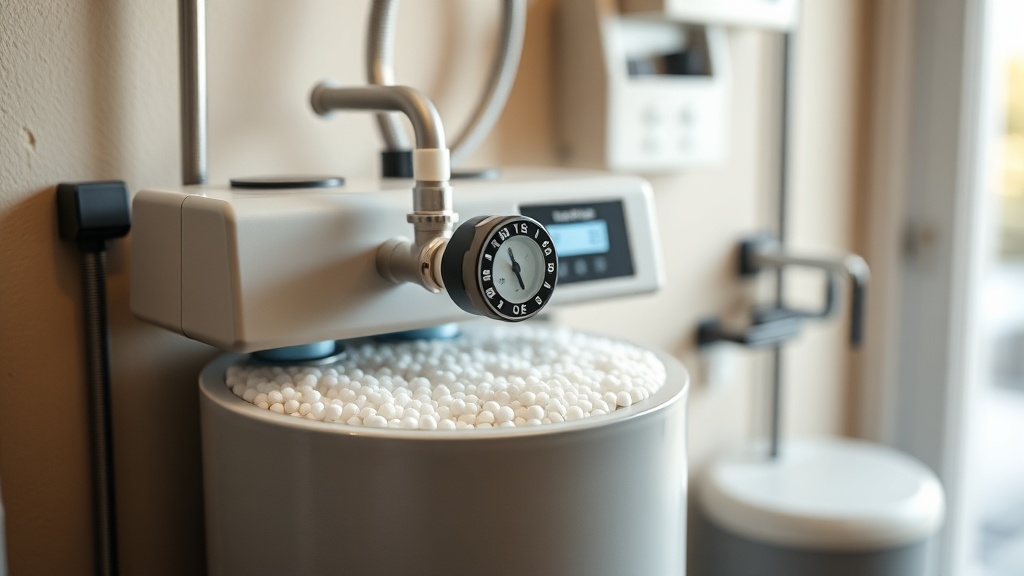
When investing in a Fleck 5600SXT water softener, understanding its salt consumption is crucial for both budget planning and system efficiency. The 5600SXT is known for its adaptive metered regeneration, which can significantly reduce salt waste compared to older timer-based models. This article breaks down the real-world salt usage, factors that influence consumption, and how to optimize your settings for maximum savings.
What Is the Default Salt Dose for the Fleck 5600SXT?
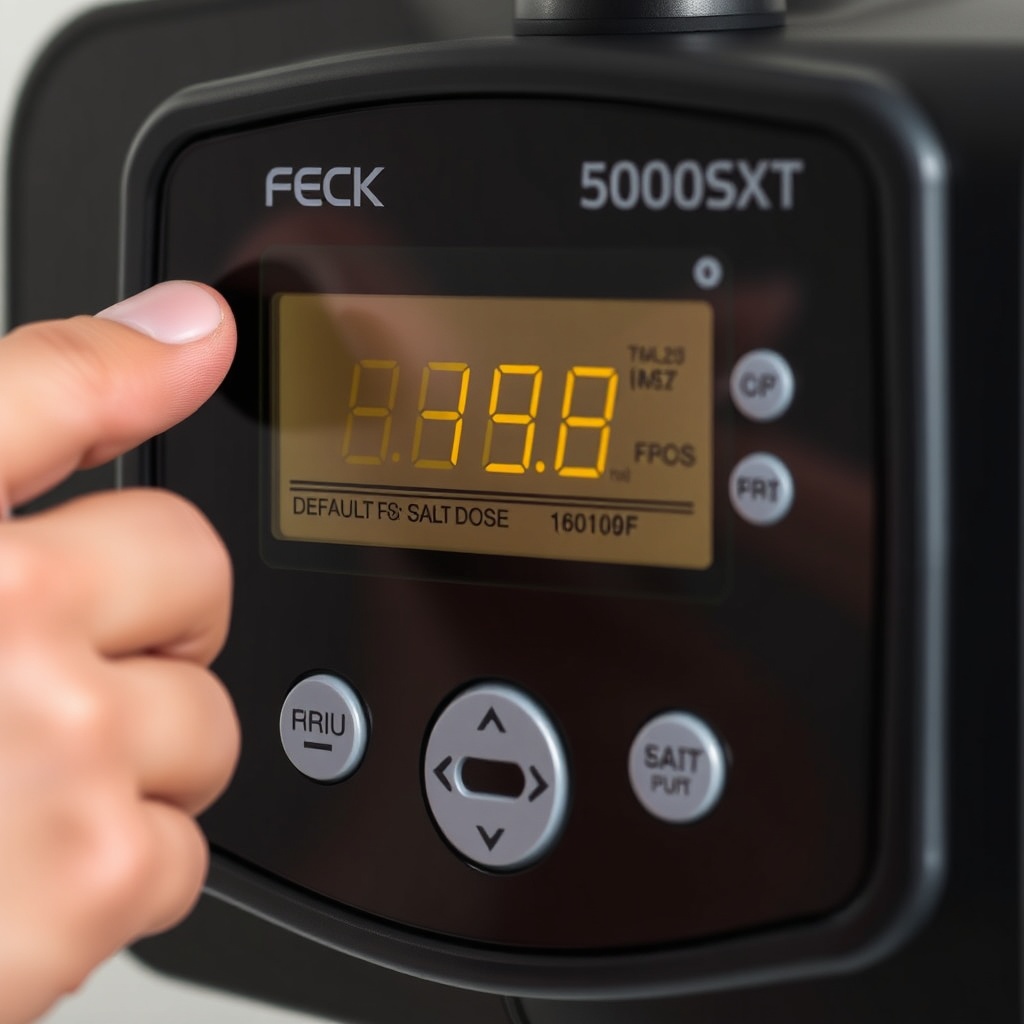
The Fleck 5600SXT comes from the factory with a default salt dose of 8 pounds per regeneration cycle. This setting is designed to treat approximately 24,000 grains of hardness at a salt efficiency of 3,000 grains per pound. However, this is a conservative baseline; most homeowners can adjust this downward without compromising water quality. The valve’s programmable controller allows you to set salt doses as low as 3 pounds per regeneration for smaller resin beds or reduced hardness levels.
For a typical household with 10 grains per gallon (gpg) hardness and 3 residents, the default 8-pound dose might be overkill. By fine-tuning the system to match your actual water usage and hardness, you can reduce salt consumption by 20-40%. This adjustment is done through the Master Programming mode, where you can modify the ‘C’ (capacity) and ‘BF’ (brine fill time) settings. For example, setting BF to 6 minutes delivers about 3 pounds of salt, while 12 minutes delivers about 6 pounds.
It’s important to note that the 5600SXT is a salt-based system, meaning it uses sodium ions to exchange with calcium and magnesium. The salt efficiency also depends on the resin type; standard 10% crosslinked resin requires slightly different doses than 8% crosslinked. Always consult your resin manufacturer’s guidelines when adjusting salt doses.
How Does the Metered Regeneration Affect Salt Usage?
Unlike time-clock softeners that regenerate on a fixed schedule regardless of water use, the Fleck 5600SXT uses a meter to track actual water consumption. This feature directly impacts salt usage because regeneration only occurs when the resin bed is nearing exhaustion. In practice, this means the system uses less salt because it doesn’t waste capacity on unused water.
The 5600SXT’s meter is installed on the outlet port and measures flow down to 0.1 gallons. When the remaining capacity drops below a programmed threshold (typically 5-10% of total capacity), it triggers a regeneration. For a family of two, this might mean regenerating every 7-10 days instead of every 3 days on a timed system. This can reduce annual salt consumption by 30-50 pounds compared to inefficient timer-based operation.
However, the meter setting must be accurate. If you set the meter to overestimate remaining capacity, you risk hard water breakthrough; if you underestimate, you regenerate too often. The ideal setting is based on your actual water hardness test. Use a reliable test kit to measure your water’s hardness in gpg or mg/L. A simple rule: multiply grain capacity by a safety factor of 0.75 to account for real-world efficiency losses.
What Factors Increase or Decrease Salt Consumption?
Several variables can dramatically alter how much salt your Fleck 5600SXT uses. These include:
- Water Hardness: Higher hardness levels require more salt per regeneration. For water above 20 gpg, expect to use 10-12 pounds per cycle.
- Water Usage: More people or higher consumption means more frequent regenerations, increasing total salt use.
- Resin Capacity: Standard resin holds about 32,000 grains per cubic foot at optimal salt dose, but at higher salt doses, efficiency drops.
- Brine Fill Settings: The BF value directly controls how much brine is made. A mistake in programming can lead to excessive or insufficient salt.
- Temperature: Cold water dissolves salt slower, potentially requiring longer brine fill times to achieve the same dose.
- Salt Purity: Impure salt can cause bridging or mush, affecting how much dissolves. Use evaporated salt or solar salt for best results.
To minimize salt waste, aim for a setting that uses about 6-8 pounds per cubic foot of resin. For a 1.5-cubic-foot resin tank (common for 3-4 person households), this equals 9-12 pounds per regeneration. Running at lower doses (like 4 pounds per cubic foot) can improve salt efficiency but reduces capacity, meaning more frequent regenerations. There’s a trade-off between salt use and regeneration frequency; some users prefer less frequent regenerations even if it means slightly higher salt per cycle.
| Symptom | Urgency |
|---|---|
| Brine tank never empties during regeneration | High – Check brine line, injector, or drain flow |
| Softened water still feels hard | High – Test hardness, check salt dose, verify bypass valve |
| Brine tank overflows with water | Urgent – Faulty float assembly or brine valve |
| Salt consumption higher than expected (10+ lbs/day) | Medium – Review hardness setting, verify meter accuracy |
| Water tastes salty after regeneration | Medium – Check drain line configuration, possible cross-connection |
| Brine tank has salt bridge (hard crust) | Low – Break up bridge, use cleaner salt types |
If you’re unsure about your system’s programming, refer to our Step-by-Step Installation Guide for the Fleck 5600SXT Water Softener for initial setup details. For troubleshooting salt-related errors, see the Fleck 5600SXT Error Codes: Quick Troubleshooting Guide.
How Do You Calculate Annual Salt Consumption?
To estimate how much salt your Fleck 5600SXT will use annually, you need three numbers: daily water usage, water hardness, and the salt dose per regeneration. The formula is straightforward:
Step 1: Calculate daily grain load = Daily gallons used × Hardness (in grains per gallon).
Step 2: Determine regeneration frequency = Resin capacity (in grains) ÷ Daily grain load.
Step 3: Annual salt = (365 ÷ Days between regens) × Salt per regeneration.
For example, a 3-person household using 240 gallons per day at 10 gpg has a daily load of 2,400 grains. With a standard 24,000-grain capacity, the system regenerates every 10 days (24,000 ÷ 2,400 = 10). At 8 pounds per regeneration, annual salt = (365 ÷ 10) × 8 = 292 pounds. At typical U.S. salt prices of $0.50 per pound, that’s $146 per year.
If you adjust to a more efficient 6 pounds per regeneration (with a lower capacity of 18,000 grains), the regeneration frequency becomes every 7.5 days, and annual salt = (365 ÷ 7.5) × 6 = 292 pounds—the same annual total. This shows that salt efficiency is not just about pounds per cycle but also about how often you regenerate. The key is to match capacity to actual needs.
For high-hardness water, the 5600SXT can handle up to 40 gpg without issues. Our Fleck 5600SXT Hard Water Test: How It Performs in High-Grain Water article shows the system maintains efficiency even under extreme conditions.
How to Adjust Salt Dose for Maximum Efficiency?
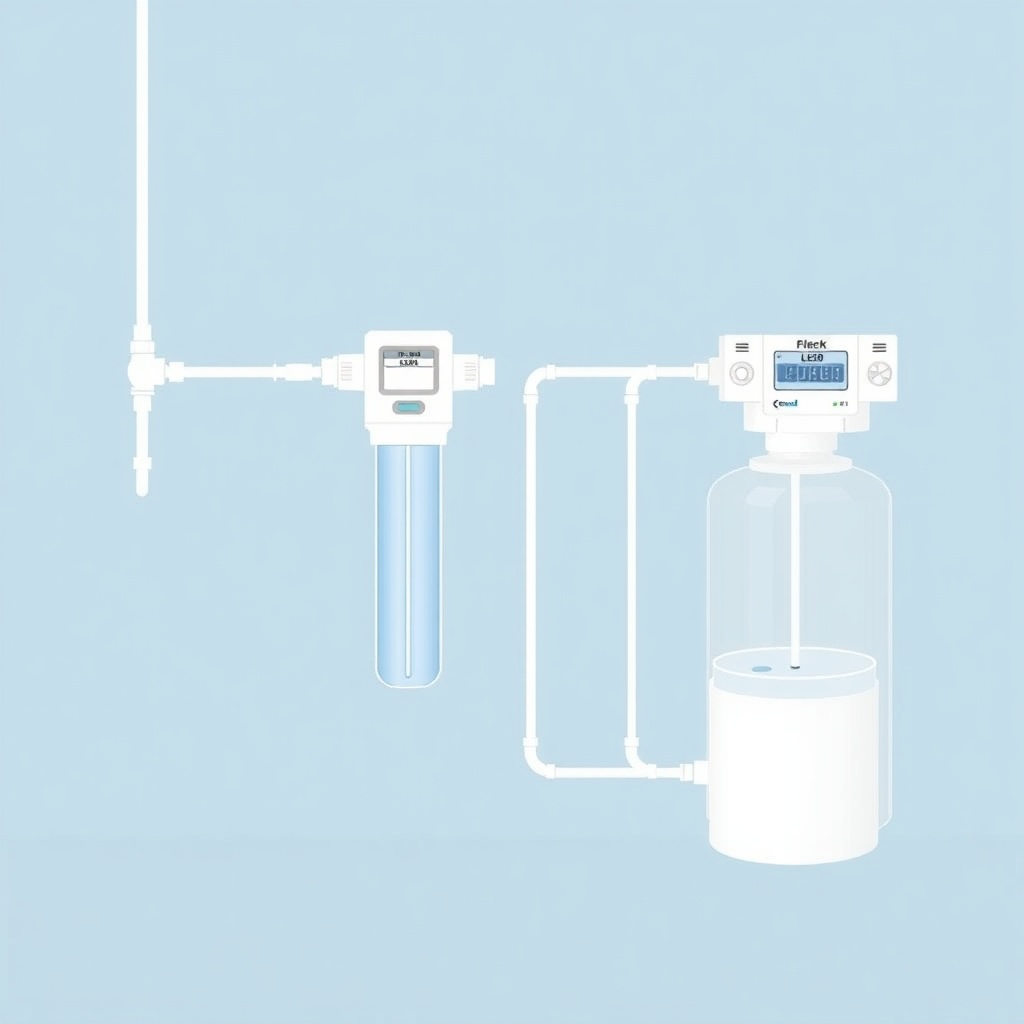
Optimizing salt use on the Fleck 5600SXT requires entering the Master Programming mode. Press and hold the UP and DOWN buttons simultaneously for 5 seconds until ‘MASTER’ appears. Navigate to ‘C’ (capacity) and ‘BF’ (brine fill time). The relationship is: BF × 0.5 = pounds of salt (approximate). So a BF of 10 minutes yields about 5 pounds of salt.
For a 1.5-cubic-foot resin tank, start with a capacity of 36,000 grains (24,000 per cubic foot × 1.5) and a BF of 12 minutes (6 pounds). After two weeks, check if the system is regenerating before the meter indicates exhaustion. If you experience hard water between regenerations, increase capacity by 2,000 grains and reduce BF by 2 minutes. If you notice too much salt left in the brine tank, decrease BF by 2 minutes.
Another method is to use the ‘Day Override’ feature. Set it to 14 days as a safety net—if the meter doesn’t trigger a regeneration in 14 days, the system will regenerate anyway to prevent bacterial growth. This prevents salt waste from unnecessary regenerations while protecting water quality.
Always use clean salt—preferably evaporated salt with minimal insolubles. Avoid block salt or rock salt that can leave sediment in the brine tank, which reduces dissolving efficiency. A clean brine tank also ensures consistent salt concentration during regeneration.
What Do Owners Say About Salt Usage?
Real-world owner feedback from water quality forums and user reviews consistently highlights two points about the Fleck 5600SXT’s salt consumption.
Owners report savings after fine-tuning. Many users who switch from timer-based softeners notice an immediate reduction in salt use. One owner reported using 2 bags per month with the default settings but cut it to 1.2 bags per month after adjusting the BF and capacity settings. The adaptive metering is praised for eliminating the ‘waste’ of regeneration on unused capacity. However, some note that the initial factory settings are conservative, so you must take the time to program the unit properly.
Efficiency varies with water quality. In areas with iron or manganese, salt consumption can increase because the resin requires more frequent cleaning. Several owners with well water report adding a resin cleaner additive every few months to maintain efficiency. Also, those with very high hardness (25+ gpg) note that the 5600SXT still uses less salt per grain removed than their previous system, but the absolute amount is still high. One owner in Arizona with 30 gpg water estimated using 8 pounds per regeneration every 4 days, totaling 730 pounds annually.
Overall, the consensus is that the 5600SXT is efficient when properly set up, but you can’t rely on factory defaults if you want maximum salt savings.
Frequently Asked Questions
1. How many pounds of salt does the Fleck 5600SXT use per regeneration?
The default is 8 pounds per regeneration, but you can set it as low as 3 pounds or as high as 15 pounds depending on your capacity setting. Most users find 6-8 pounds optimal for typical home sizes.
2. Can I use potassium chloride instead of sodium chloride?
Yes, the Fleck 5600SXT can use potassium chloride, but you need to increase the salt dose by about 30% because potassium chloride is less effective at regenerating resin. Adjust BF times accordingly.
3. Why does my Fleck 5600SXT use more salt than expected?
Common causes include incorrect hardness setting, a salt bridge preventing proper brine formation, a dirty injector, or the meter not accurately tracking water usage. Check your hardness test results and inspect the brine tank.
4. How often should I add salt to the brine tank?
Check every 2-3 weeks. The tank should remain at least half full of salt to ensure proper brine concentration. If the salt level dips below the water level, you may experience hard water breakthroughs.
5. Does the 5600SXT waste salt during regeneration?
No, it uses a countercurrent regeneration design that pushes brine in the opposite direction of service flow, which improves salt efficiency. However, some salt is lost during the brine tank refill and rinse cycles—about 0.5 pounds per regeneration under normal conditions.
6. How do I know if my salt dose is too high?
Signs include leftover salt in the brine tank after regeneration, a salty taste in the water, or the system regenerating more frequently than calculated. Check your brine tank for solid salt remaining, and verify your settings match your resin volume.