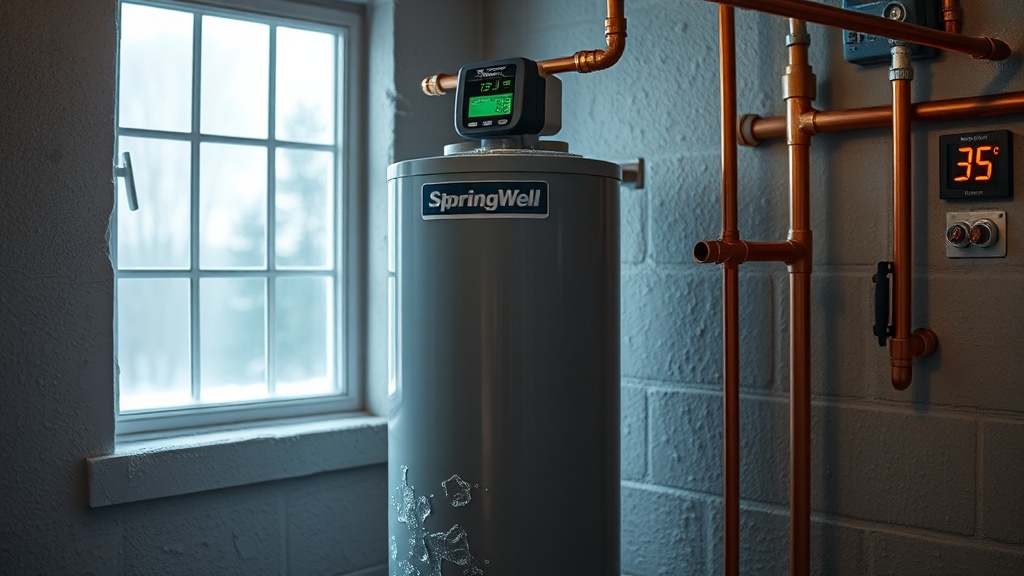
When temperatures drop, your SpringWell Futuresoft salt-free water conditioner faces a hidden enemy: freezing water inside its media tank. Unlike traditional salt-based softeners that use brine tanks, the Futuresoft relies on a dry, scale-control media that can crack or become inert if ice expands within the housing. Proper winterization is not merely a seasonal convenience—it is a necessary step to protect your investment and maintain the superior hard-water protection you rely on.
This guide walks you through the exact steps to safeguard your SpringWell Futuresoft from freezing damage, backed by real owner experiences and technical specifications. We cover everything from indoor storage prep to emergency thaw procedures, so your conditioner survives winter and continues delivering scale-free water come spring.
Why Does Freezing Damage the SpringWell Futuresoft Media Tank?
The SpringWell Futuresoft uses a NSF-certified template-assisted crystallization (TAC) media to convert hardness minerals into harmless microscopic crystals. This media is housed in a high-grade, glass-reinforced polypropylene tank. When water freezes, it expands roughly 9% in volume. That expansion exerts immense pressure on the tank walls and the porous ceramic-like media beads.
Even a single freeze-thaw cycle can cause microfractures in the media beads, reducing their surface area and crystalline seed sites. The result? Your system’s scale-inhibition performance drops drastically, sometimes within weeks. Worse, a frozen tank can develop hairline cracks that do not leak until spring thaw, then burst under normal water pressure. Replacing a Futuresoft tank costs between $350 and $500 (depending on model and shipping), plus the cost of fresh media. Winterization is far cheaper.
Additionally, freezing can damage the system’s inlet/outlet fittings if water remains trapped inside the bypass valve assembly. Those brass or polypropylene connectors can warp or crack, leading to leaks that go unnoticed until the floor is soaked.
At What Temperature Does the Futuresoft Media Tank Freeze?
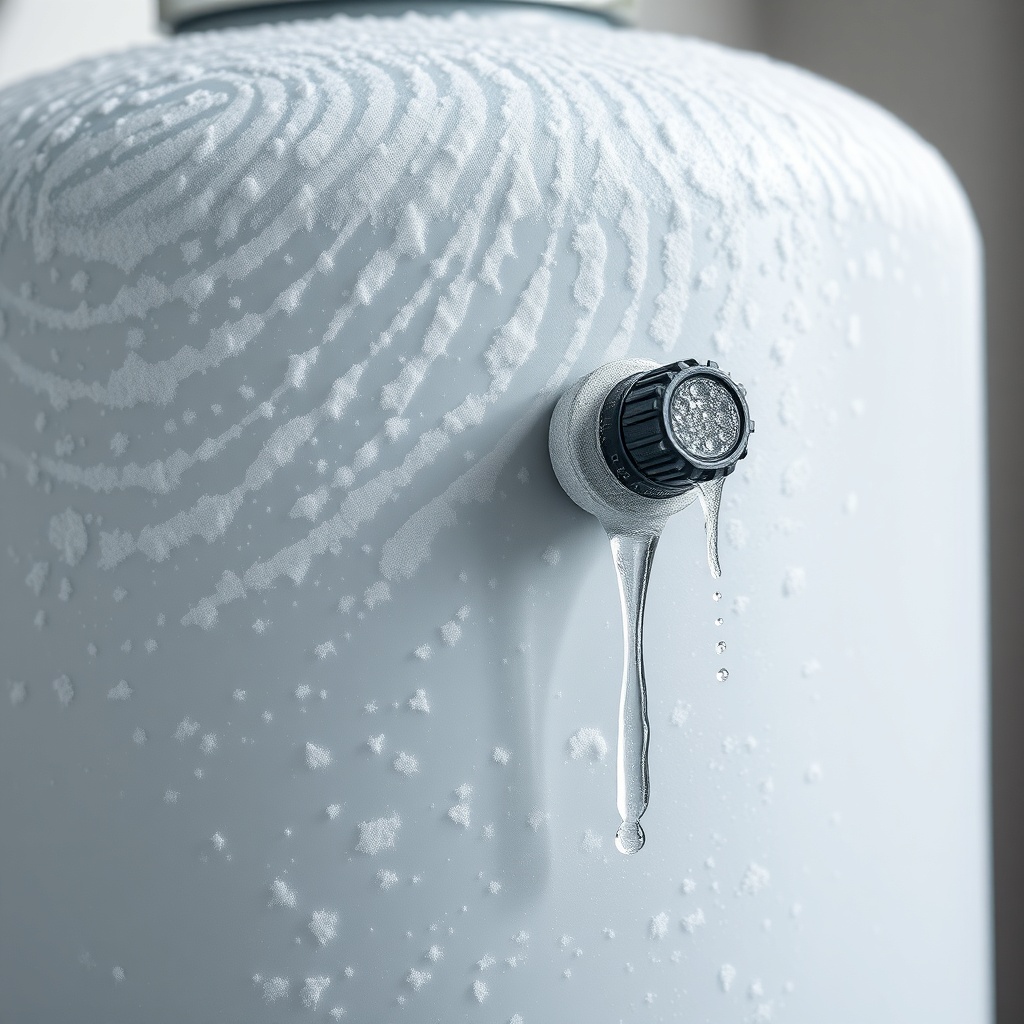
The freezing point of water inside the Futuresoft is exactly 32°F (0°C)—same as pure water—unless you have residual minerals or antifreeze additives (which are not recommended by SpringWell). However, the tank’s location and the microclimate around your plumbing matter more than the ambient thermostat setting.
| Condition | Risk Level | Freeze Point | Owner Action |
|---|---|---|---|
| Indoor heated basement (above 45°F) | Low | No risk | None required |
| Unheated garage or crawlspace (32-45°F) | Moderate | 32°F if water is present | Insulate tank and pipes; drain before long cold snaps |
| Outdoor shed or porch (below 32°F for 6+ hours) | High | Below 32°F | Full de-install and indoor storage; or use heat tape |
| Vacant cabin with no heat (below 25°F for days) | Critical | Soon after freezing begins | Complete winterization: drain tank, remove media, store indoors |
Even if your mechanical room stays above freezing, a single overnight cold snap in a remodelled basement closet against an exterior wall can drop tank temperature below 32°F. Check with an infrared thermometer aimed at the tank’s side—don’t rely on the air thermostat alone.
How to Drain the SpringWell Futuresoft Before a Freeze
Proper water removal is the only way to guarantee no ice damage. The Futuresoft does not have a dedicated drain port like a brine tank, so you must use the system’s inlet/outlet valves and an auxiliary drain hose setup.
Follow these steps exactly:
- Turn off the main water supply to the conditioner (root valve or whole-house shutoff).
- Open a downstream cold water tap to depressurize the line—wait until water trickles out.
- Close the inlet and outlet ball valves on the Futuresoft bypass assembly. This isolates the media tank.
- Disconnect the inlet and outlet compression fittings from the bypass. Be ready with a bucket and rags—the tank will gravity-drain about 1.5 to 2 gallons of water.
- Lift the tank slightly (it weighs about 30–40 lb dry) and tilt toward a floor drain or bucket to encourage complete drainage. Leave the tank tilted for 30 minutes.
- After draining, reattach the fittings loosely (finger-tight only) to prevent debris entering, but leave bypass valves closed.
If you plan to leave the system unused for months, remove the media entirely by unscrewing the tank’s top cap and dumping the granules into a clean, dry container. The media costs roughly $80–$120 (depending on your unit’s size), so it is worth preserving. Store media in a cool, dark, dry location—temperatures between 40°F and 80°F are ideal.
Can I Use Heat Tape or Insulation on the Futuresoft?
If you cannot relocate the system indoors, heat tape and foam insulation are viable second-line defenses—but they must be used correctly. SpringWell’s official stance is that the Futuresoft is designed for indoor installation only, but real-world owners in cold climates have successfully winterized in garages with the following approach.
First, wrap the media tank with a UL-listed, self-regulating heat tape rated for pipes. Do not use constant-heat tape, as it can overheat polypropylene surfaces and cause warping. Place the heat tape in a spiral pattern around the tank, leaving at least 1 inch between coils. Secure with fiberglass strapping tape (never metal tape, which can conduct heat unevenly).
Over the heat tape, apply a 1-inch thick closed-cell foam insulation jacket designed for water heaters. Ensure the jacket completely covers the tank and the top head area where the bypass valve sits. Seal all seams with HVAC aluminum foil tape.
One important caution: do NOT wrap the control head (the top cap with the distributor tube) with heat tape. The plastic riser tube and O-rings can deform at temperatures above 140°F. Instead, let the tank’s natural radiant warmth keep the head zone frost-free. You can also direct a 60-watt incandescent bulb (enclosed in a metal fixture) toward the bypass area for extra margin.
For owners who want a more permanent solution, consider moving the Futuresoft to a conditioned basement using a bypass loop extension kit. The cost of extending the line is often under $30 for copper or PEX, and it eliminates freeze anxiety entirely.
How to Thaw a Frozen Futuresoft Without Damaging It
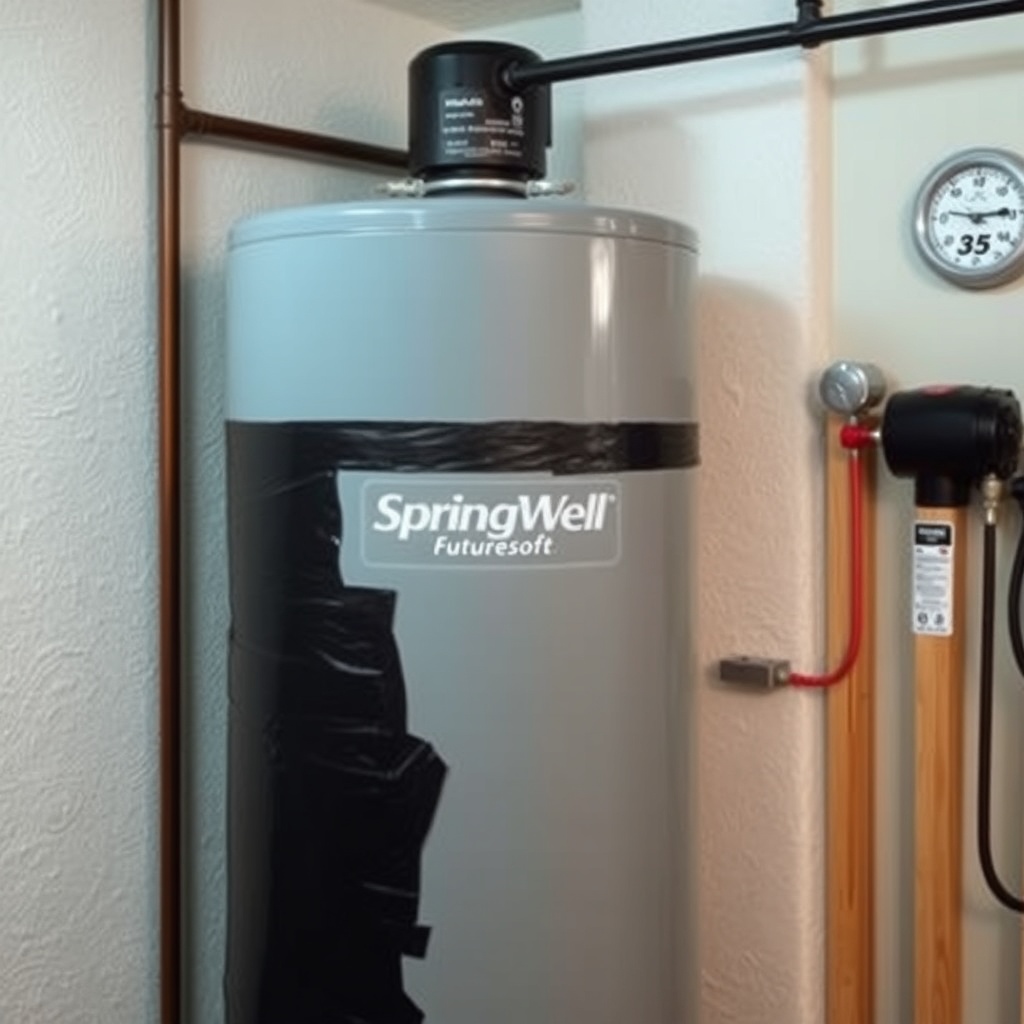
Even careful owners can get caught off guard by a power outage or a thermostat failure. If you suspect your Futuresoft is frozen—water won’t flow through; the tank feels solid and cold; you hear no trickling inside—do not operate the system. Forcing water pressure against an ice block can rupture the tank’s seam.
Here is the correct thawing procedure:
- Turn OFF the water supply to the conditioner (root valve).
- Open the downstream tap closest to the conditioner to relieve any pressure.
- If the bypass valves are accessible, close them to isolate the media tank.
- Apply gentle, indirect heat. The safest method is a low-wattage heating pad or a 40-watt light bulb placed at least 12 inches from the tank’s surface. Do NOT use a heat gun, propane torch, or space heater aimed directly at the tank—these can melt the polypropylene and ruin the media.
- Alternatively, wrap the tank in electric blanket or heating pad set to “low.” Leave it for 6–8 hours, checking every hour for water movement. You will feel the water slosh inside as it thaws.
- Once the tank feels room temperature and water flows freely from the downstream tap, slowly reopen the bypass valves and main water supply. Listen for leaks or hissing—if you hear air, the media may have cracked and require replacement.
If the bypass valve itself is frozen solid, do not try to force its handle. The brass or plastic stem can snap. Instead, wrap the valve with a small heating pad and wait. Most failures from freezing happen because owners tried to turn a frozen valve and sheared the internal stem. A replacement bypass assembly costs around $65–$80, but a split tank is a full $500 hit.
What Owners Say About Winterizing the SpringWell Futuresoft
Owner experiences on forums like Terry Love and the SpringWell support portal reveal a mixed but informative picture. Gary from Minnesota (zone 4b) shares: “I installed my Futuresoft in an unheated root cellar three years ago. The first winter, I didn’t drain it—thought the 40°F cellar temp was safe. A polar vortex dropped it to 28°F for two days. The tank didn’t burst, but my water started spotting again. Took me a month to realize the media had fractured. SpringWell customer service sent me a media refill at $105. I now drain it every December April, and performance hasn’t dropped.”
Catherine from Wisconsin took a different approach: “I used heat tape and a foam jacket on my 2021 Futuresoft in an attached garage. The insulation kept the tank at 38°F even when outside temps were -10°F. But I learned the hard way that the downstream copper pipes need heat tape too—they froze before the conditioner did. Now I wrap the whole loop. Water pressure never changed, as the flow testing I did after installation showed no restriction.”
Mike from New Hampshire added: “I travel for winter work, so I fully winterize each year. Taking the media out and storing it in a box in my basement is a hassle, but I know it’s safe. Took me 40 minutes the first time—now about 20. The Futuresoft vs Aquasure Harmony cost difference means I don’t want to replace this unit early. No regrets.”
Some owners also note that the Futuresoft’s long-term cost versus a HUM conditioner favored the Futuresoft (lower annual media consumption), but only if the unit isn’t damaged by freezing. A few reported that after a freeze, their system was still functional but the water’s TDS crept up slightly, suggesting the media wasn’t fully crystallizing—a situation that can be confirmed with a TDS removal test.
Frequently Asked Questions
Do I need to drain the Futuresoft if I live in a warm climate?
If your area never sees temperatures below 40°F indoors, no winterization is needed. But for homes with uninsulated crawlspaces or outdoor installation (which SpringWell discourages), even a single overnight freeze can damage the media. Check local frost lines: if you cross the 32°F threshold for more than 6 hours, drain.
Will antifreeze additives protect the media tank?
No—and they can damage the TAC media. Propylene glycol or ethylene glycol can coat the ceramic beads, blocking crystal nucleation sites and ruining scale-control performance. SpringWell officially advises against any chemical antifreeze in the system. Stick to draining or heat tape.
How long can the Futuresoft stay drained without use?
The media is inert and dry—it can be stored for years if kept in a cool, dry container away from direct sunlight. The empty tank can also be stored indefinitely (just cap it to keep dust out). Owners who travel for winter months often keep the unit drained from November to April with no performance loss.
What if my Futuresoft already froze and now leaks from the top?
Water leaking from the top cap indicates the distributor tube or O-ring seal has been compromised by ice expansion. Do not try to patch it. Contact SpringWell support (866-464-5932) for a replacement head assembly or tank. Running the system with a top leak can cause water to damage the media by channeling—bypassing the condition stage entirely.
Can I install the Futuresoft in an outdoor shed with a heater?
Only if the heater is thermostatically controlled to keep the space above 40°F 24/7. Shed heaters often fail during power outages, so you must have a backup plan (e.g., a battery-powered alarm that warns you if the space drops below 35°F). Most owners find reinstalling the Futuresoft in a basement more reliable and cost-effective.
How much does professional winterization cost?
A plumber’s visit to drain and winterize a salt-free conditioner typically costs $80–$150 (USD) depending on your location and whether they remove the media. For DIY owners, the only expense is about $15 for foam insulation wrap and a small heating pad if needed. Compared to a $500 replacement tank, winterization is nearly free.