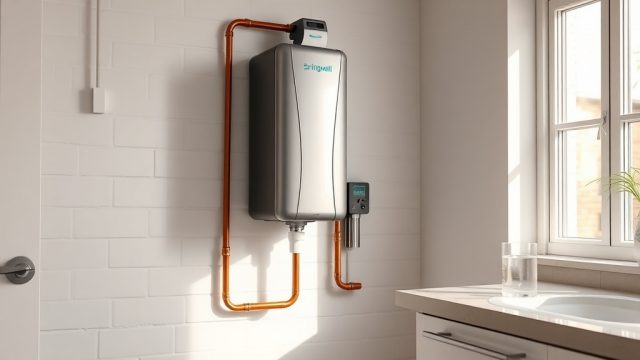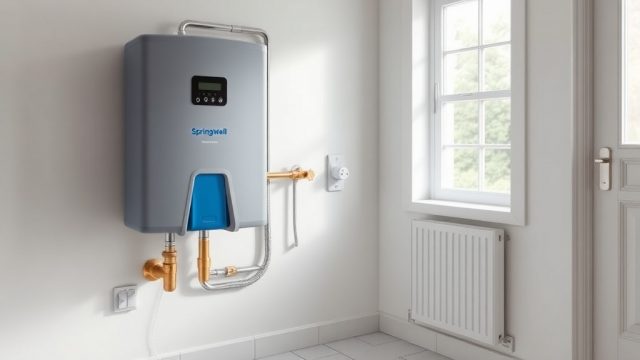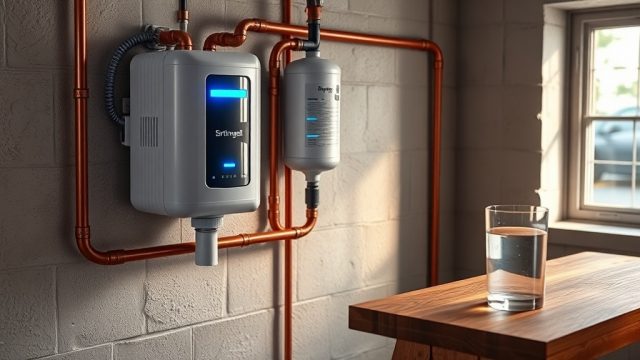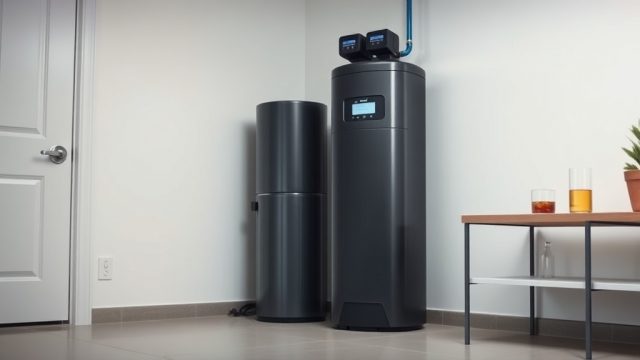
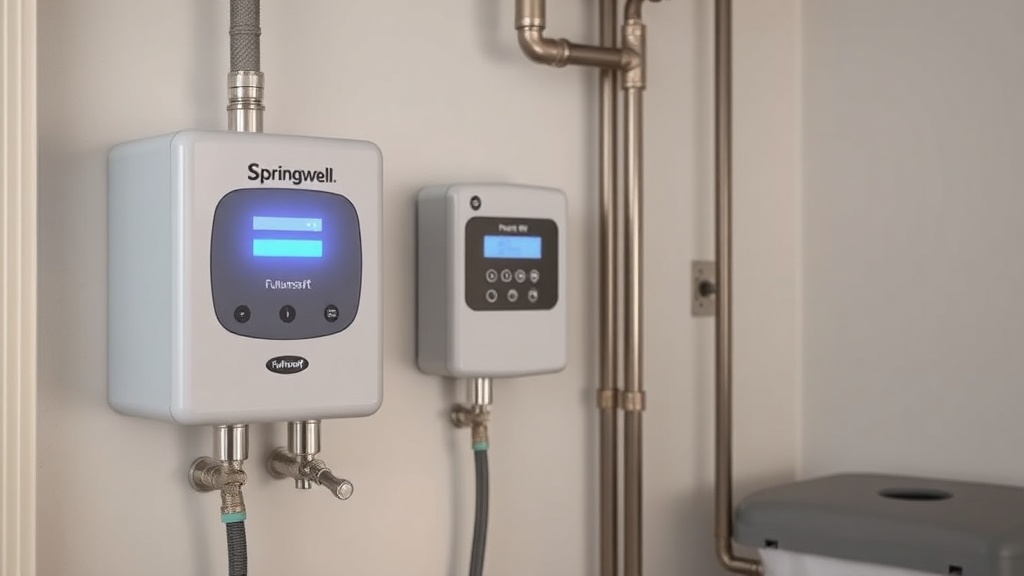
For homeowners weary of lugging heavy salt bags or dealing with the slippery feel of softened water, the SpringWell Futuresoft offers a tantalizing alternative. However, traditional salt-based softeners remain the industry standard for a reason, providing proven, relentless hardness removal. This article pits the SpringWell Futuresoft against traditional salt-based systems to help you decide which is truly better for your home and lifestyle.
How Does the SpringWell Futuresoft Remove Hardness Without Salt?
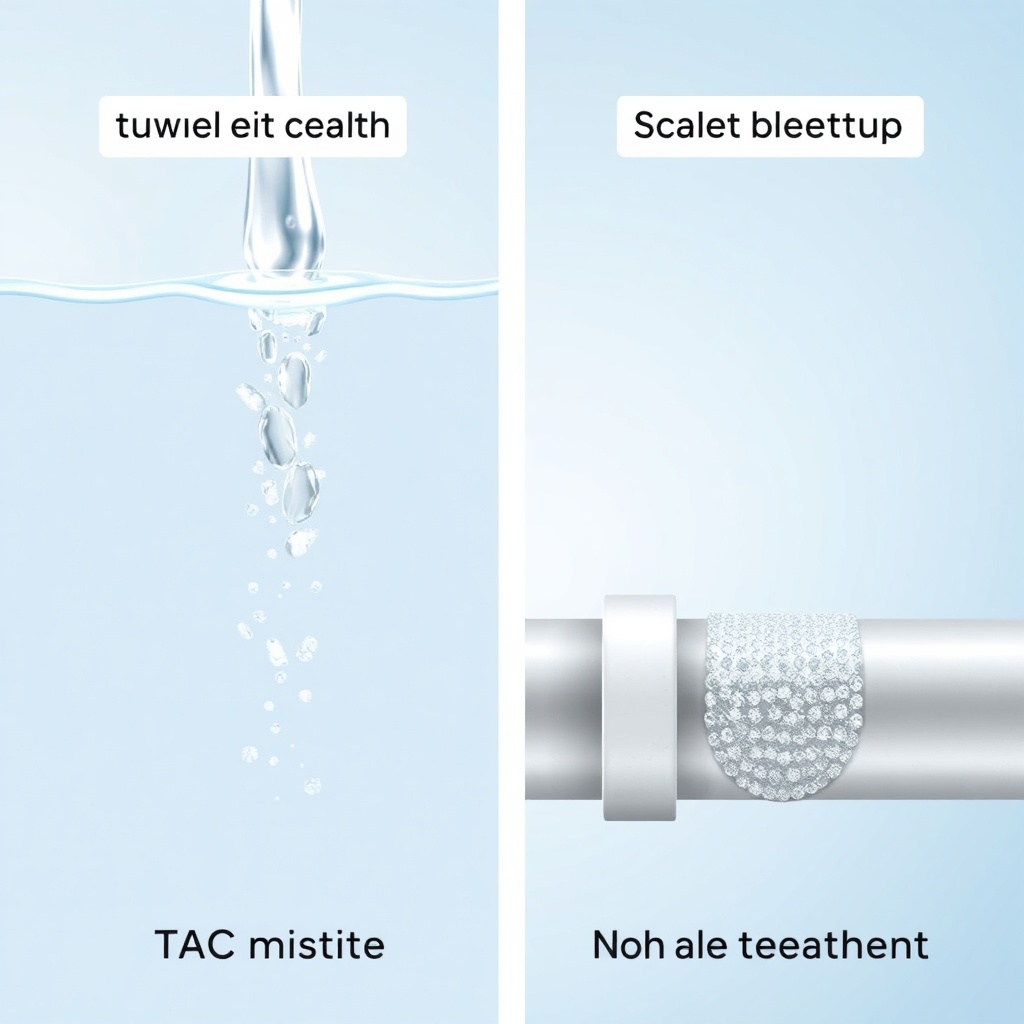
The SpringWell Futuresoft uses a physical Template Assisted Crystallization (TAC) media, not chemical ion exchange. Instead of removing calcium and magnesium by swapping them for sodium, the TAC media transforms these minerals into microscopic, harmless crystal particles. These crystals remain suspended in the water rather than settling onto surfaces as scale. It is critical to note that the Futuresoft does not lower the total hardness measurement in parts per million (ppm). It simply changes the form of the minerals so they will not adhere to pipes or fixtures. For most owners, this means an end to scaling without the addition of salt or wastewater generation. However, because the hardness minerals stay in the water, you may still notice a faint mineral taste, and the soap lathering characteristics will differ from those of a salt-softened supply.
We discuss the SpringWell Futuresoft Performance Testing: Does It Really Remove Hardness? in a separate deep dive, but the short answer is that it prevents scale rather than removing the minerals entirely.
What Are the Ongoing Costs of a Salt-Based System Versus the Futuresoft?
Cost comparison heavily depends on local water quality and usage, but we can establish realistic ballpark figures. A typical household with a salt-based softener will spend between $120 and $250 annually on salt pellets, depending on water hardness (measured in grains per gallon) and consumption. You also need to budget for resin cleaning chemicals (resin cleaner, about $20 per year) and potential maintenance every five to ten years, such as replacing the resin bed ($200 to $500).
The SpringWell Futuresoft has a much higher upfront cost—roughly $2,000 to $2,500 for the unit itself, including the pre-filter and post-filter cartridges. There are no salt purchases, but you must replace the pre-filter every 6–12 months ($30–$60 per filter) and the TAC media cartridge every 3–5 years (approximately $300–$400). Over a ten-year period, the Futuresoft can be slightly cheaper or similar in total cost if your salt and maintenance expenses are high, but the initial purchase price is significantly steeper. If you have SpringWell Futuresoft Low Flow Troubleshooting: Causes and Fixes issues, those can also add service call costs, whereas salt units are simpler to repair.
Does the Futuresoft Provide the Same “Slippery” Feel as Salt Softened Water?
No. This is one of the most common points of confusion. Salt-based softeners produce water that feels distinctly “slippery” or “silky” because the calcium and magnesium ions have been removed and replaced with sodium ions. This gives water a smooth, slick feel that many people associate with being clean. The SpringWell Futuresoft cannot replicate this sensation because it does not remove the hardness minerals—it only changes their crystal structure. The water from the Futuresoft will feel more like the original hard water, though slightly less harsh because the minerals are no longer aggressive scale-formers. If the slippery feel is important to you (for showering or dishwashing), a traditional salt-based system is the only way to achieve it. Some owners combine a Futuresoft with a small point-of-use water softener for specific taps, but that adds complexity and expense.
Which System Handles Very Hard Water Better?
This is a decisive factor. Salt-based softeners can handle any water hardness level, including extremely hard water exceeding 100 grains per gallon (gpg). The resin beads will simply regenerate more frequently. The SpringWell Futuresoft has a stated working limit of around 20–25 gpg (roughly 340–425 ppm of hardness). Beyond that level, the TAC media becomes saturated with mineral crystals and fails to prevent scale effectively. For households with extremely hard water (above 20 gpg), the Futuresoft is not a reliable primary solution. You should test your water hardness with a reliable test kit before purchasing. If your hardness is consistently above 18 gpg, a salt-based softener is the correct choice. For moderate hardness (10–18 gpg), the Futuresoft works well and avoids the drawbacks of salt usage. For borderline cases, some professionals recommend a whole-house SpringWell Futuresoft Smart Controls Guide: Programming Your Conditioner to see if you can adjust flow rates to improve performance, but it will not overcome the physical limit of the media.
How Do Maintenance and Upkeep Compare Between the Two Systems?
Salt-based softeners require regular monthly maintenance: checking the brine tank for salt bridges, ensuring the salt level is adequate, cleaning the brine tank annually, and occasionally cleaning the injector or venturi. The regeneration process uses significant water (50–100 gallons per cycle) and discharges brine into the drain. A timer-based softener will regenerate on a schedule, wasting water if you are on vacation. Demand-initiated (metered) softeners are more efficient but still require salt management.
The SpringWell Futuresoft requires almost no active maintenance. You need to change the sediment pre-filter every 6–12 months (a 30-second job), replace the post-filter carbon cartridge annually, and replace the TAC media every 3–5 years. There is no regeneration, no salt delivery, and no brine discharge. However, the Futuresoft does have a flow-rate dependence: if you exceed the rated flow (typically 9–12 gallons per minute for residential models), the TAC media cannot crystallize the minerals fast enough, leading to scale breakthrough. We cover this extensively in SpringWell Futuresoft Low Flow Troubleshooting: Causes and Fixes.
Are There Health or Environmental Advantages of the Futuresoft?
Yes, for both health and the environment. Salt-based softeners increase sodium content in drinking water by roughly 7–10 mg per liter per 1 gpg of hardness removed. For a 10 gpg water supply, that adds about 70–100 mg/L of sodium. Many people with hypertension or sodium-restricted diets find this unacceptable, especially for drinking and cooking. A reverse osmosis system can remove this sodium, but that is an additional expense and appliance. The SpringWell Futuresoft adds nothing to the water—no sodium, no chemicals. The SpringWell Futuresoft Performance Testing: Does It Really Remove Hardness? effectively prevents scale without altering the water chemistry, so the mineral content remains identical to the source water, just in a different physical form.
Environmentally, salt-based softeners discharge salty brine to septic systems or municipal wastewater, which can harm septic tanks over time (salt water kills beneficial bacteria) and contribute to rising chloride levels in freshwater sources. The Futuresoft produces no brine discharge and wastes zero water. It is a clear winner for anyone trying to minimize their environmental footprint or protect a septic system.
What Owners Say
“After two years with the Futuresoft in our 15 gpg well water, we have zero scale on our glass shower doors. But my wife hates that the water still feels ‘hard’ when washing her hair, and she bought bottled water for drinking because it tastes minerally.” – John, home of four, Texas.
“We switched from a salt-based system to Futuresoft six months ago. I love not buying salt, but I’ve already had to clean the dishwasher heating element once because some scale built up. My water hardness is 22 gpg, which I now realize is too high for this unit. I should have stuck with salt.” – Maria, New Mexico.
“Installation was straightforward, and I enjoy the smart controls that let me set vacation mode and track filter life. I do wish the pre-filter was cheaper, but overall the system is quiet and neat. No brine tank in my garage is a big plus.” – Peter, Arizona.
Specification Comparison Table
| Feature | SpringWell Futuresoft | Traditional Salt-Based Softener |
|---|---|---|
| Hardness removal method | Template Assisted Crystallization (no removal of minerals) | Ion exchange (removes calcium/magnesium, adds sodium) |
| Maximum hardness recommended | 20–25 grains per gallon (gpg) | 100+ grains per gallon (gpg) |
| Water feel | Similar to raw water, no slipperiness | Slippery, silky feel |
| Ongoing costs (per year) | $60–$200 (filters + media refill) | $120–$250 (salt + resin cleaner) |
| Water waste | Zero (no regeneration) | 50–100 gallons per regeneration (weekly) |
| Environmental impact | No brine discharge, no sodium added | Brine discharge to septic or sewer |
| Maintenance level | Low (filter changes, media every 3–5 years) | Moderate (salt refills, tank cleaning, injector cleaning) |
Frequently Asked Questions
Can the SpringWell Futuresoft be used with a water softener for extra protection?
Yes, you can install a salt-based softener upstream or downstream of the Futuresoft, but it defeats the purpose of avoiding salt. Some people install a small point-of-use softener only at the kitchen tap or shower, while using Futuresoft for the whole house. This hybrid approach is uncommon and requires careful plumbing.
Does the Futuresoft affect iron or manganese in water?
No. The TAC media works only on calcium and magnesium. If you have iron or manganese in your water, you need a separate iron filter or a salt-based softener capable of iron removal. The Futuresoft will not treat those contaminants.
What is the lifespan of the TAC media in the SpringWell Futuresoft?
Manufacturer specifications typically state 3 to 5 years, but actual lifespan depends on water hardness, flow rate, and water temperature. If your water is near the 20 gpg limit, the media may degrade faster. You will notice scale forming again when the media is exhausted.
Will the Futuresoft void my water heater warranty?
Most water heater warranties require softened or conditioned water to prevent scale buildup. Since the Futuresoft prevents scale rather than removing hardness, many manufacturers accept it, but check your specific warranty. Some explicitly require “softened water” defined as water with reduced mineral content, which the Futuresoft does not provide.
Can I use the Futuresoft with a septic system?
Yes, the Futuresoft is excellent for septic systems because it does not discharge salt brine that can harm septic bacteria. It is one of the main advantages. The system adds no chemicals to the wastewater stream.
Does the Futuresoft require electrical power?
The standard SpringWell Futuresoft does not require electricity. The flow of water powers the TAC media. Some models with smart controls may require low-voltage power for the control panel and flow meter, but the core conditioning process is passive.